


Birthing
Open Letter to BC Homebirth Study Critics

Dear Uniformed Commenter After reading the newest study on the safety of homebirth, I sat back to read some reactions from the press and the public. I had a look at the CTV coverage and the CBC coverage and I read over the comments in reply to each story. Imagine my dismay when I read some of your reactions! I was rather glad that the comments were closed because I was too upset to post anything coherent or cool-headed. Frustrated, I can not stop thinking about your replies. First, I shake my head as it appears that you’ve neither read the study nor understood the very article you’ve responded to. You seem to have missed the point entirely. Your arguments fall into one of several categories: 1. The Personal Anecdote Rebuttal This is some variation of “I can only imagine how horrible our child’s birth would have turned out if we had tried to have a home birth” and then launching into your personal story where everything was touch-and-go but thankfully the medical staff at the hospital saved your baby. First of all, this is not a logical rebuttal to a scientific study. This is an emotional reaction known as a pathetic appeal. You are rejecting “a claim based on how it makes you feel without fully analyzing the rationale behind the claim”. You are appealing to people’s very real emotions about the health and safety of a tiny baby at the expense of being able to actually hear what the study’s authors are trying to tell you. While it is totally understandable that this is an emotionally sensitive topic for many, the problem is that you are overemphasizing the emotional component at the expense of the message (the logical component) – this is a flawed argument. Effective, yes – ad campaigns do it all the time, but flawed nonetheless. Secondly, while my heart goes out to you that you had a difficult and scary time at the birth of your baby and while I’m glad that modern medicine was able to save your baby, we can’t actually compare your situation with that of the study subjects. We have no way of knowing with the few details you’ve given if your particular circumstances would have made you an eligible sample for the hospital group. Perhaps you had complications or a high-risk pregnancy that would have excluded you from the study. Therefore, sadly, your situation is not a relevant point of comparison for a study that was looking at births fitting very specific criteria. If that is the case, even the study’s authors, home birth advocates, the BC College of Midwives etc. would all agree with you: your child’s birth should not have occurred at home because it did not meet the criteria to have a home birth safely. 2. The What If Question This argument boils down to “Yes, homebirth is fine as long as nothing goes wrong. But why chance it?” You have missed the point completely; the study concluded that home birth is as safe as hospital birth because in all the cases studied, virtually nothing did go wrong. The perinatal death rate was the same as for both hospital groups (in fact, it was marginally lower in the homebirth group). This what-if-something-goes-wrong argument was essentially what the study was trying to find out – how often does something go wrong at home? And the conclusion was, provided certain guidelines are followed: no more often than something goes wrong in the hospital. 3. The Get With The Times Blow Off This argument is the most uninformed of the bunch. You demonstrate your complete lack of understanding of maternity care and midwifery with variations of “Midwives are old hippies with no training and would be useless in an emergency” or “Stop being so full of yourself and your need to prove something – modern medicine is here for a reason, use it.” This brand of reaction is intended to silence anyone supportive of homebirth by insulting and denigrating but it only demonstrates your own ignorance. Midwives, in BC...
Read MoreSix Week Check-Up

Do you have new first time parents in your life? You’ve probably gotten them a gift and visited to meet the new wee one. You’ve probably puzzled over what a new family needs and how to help out. There are lots of great ideas out there. Here’s one I particularly liked as it really rang true for my experience as a new parent. To take it one step further, I’d like to challenge everyone out there to do the Six Week Check-up. That is, make a point of checking in with the new mom as her baby nears the six week mark. Why Six Weeks? Do you remember the six week check up after you had your first baby? Do you remember what else was going on for you then? Maybe you haven’t had kids yet or maybe your kids are older and now that you’ve left the sleep-deprived haze, those early days are all a blur. Let me remind you: The first few weeks were all bliss, staring at baby in awe, proudly presenting her to family and friends, feeling totally bonded to your partner for producing this perfect little angel. But now? Dad has gone back to work. The whirlwind of out-of-town visitors is slowing or they’ve all come and gone. Friends and family have all met baby and are back to their regular lives: working, house renos, family vacation. The new baby celebrations have all ended: the baby shower or meet the baby party was a few weeks ago. Friends are no longer dropping in with a cute onesie or yet another handmade blanket. The email congratulations have tapered off. In short, everyone else’s excitement has worn off. For them, now it’s business as usual. For mom? She’s home alone with baby and the reality of her new life is finally starting to hit her. This likely means getting used to the isolation of maternity leave. The first few weeks felt like a well-deserved vacation, especially after the aches and pains and fatigue of working while pregnant. But now, she’s kind of bored. She’s surprised by how much she misses talking to adults when she’s staring at the four walls and nursing AGAIN. She’s surprised by how much she misses the noise of the office (or the restaurant or the store or wherever it was for her) when she realises how quiet it is at home alone while her friends and partner are at work. When she sees her friends, she realizes she has surprisingly little to talk about now that she can’t talk about her work. She wonders what to do with herself and she misses that productive self, that woman who excelled at her work. It’s lonely and she feels a little lost in a culture that defines people by the work they do. After the standard first few weeks rest and recovery, she was feeling great and tried to get back to her normal routine, only to find that she’s still exhausted. Mama’s beginning to realise that her plans of continuing life as before with baby in tow might be a little unrealistic. Her thoughts of tackling some of those crafting projects gathering dust during her “year off” seem laughable now as she struggles to sleep enough, keep the house clean, shower and eat lunch. By 6 weeks, the new family is likely out of the extra freezer food they prepared before the birth and friends are no longer dropping off casseroles. Offers to throw a load of laundry in or pick up groceries while new mom grabs a nap have petered out. Mom’s learning to navigate the grocery store with baby (and all the baby gear) now. Every day is a list of laundry, nursing, diapers, nursing, napping, nursing, dishes, nursing, more laundry, more nursing, more diapers. She’s surprised at how little she accomplishes and she might be starting to get run down around the 6 week mark because she’s trying to do too much. Back to regular life? Not exactly. At 6 weeks, baby often goes through a growth spurt (also...
Read MoreBirth Plan Basics

Once unheard of, it is now routine to hear “this is a copy of my birth plan” as a woman is admitted to L&D. There is a lot of info (and opinions) out there about birth plans. This post is intended as a primer to get you pointed in the right direction. Often explained as a document outlining how you wish your childbirth experience to go, the birth plan is much more: The birth plan is way to prepare for your birth: properly prepared, it will require discussion with your care providers and likely personal research and reading. It will allow you to seriously consider how you feel about medications, interventions, procedures, and yes, emergency situations should they arise. It will give you an opportunity to talk with your partner about his/her hopes and fears and to communicate about what is important to you both. The birth plan is a communication tool: hopefully it will clearly and succinctly spell out your wishes and expectations not just for your childbirth experience, but for the safety of your baby and yourself. It can function as a reminder to your care provider of things you may have talked about weeks before. The birth plan can have the power to speak for you despite staff shift changes, whether or not you have an advocate there for you (partner, family, friend or doula) and whether or not you are in a condition to speak for yourself. The birth plan is not a frivolous wish list: it is a simple one page statement outlining what you are ok with and what you are not ok with. Birth plan detractors seem to feel that a birth plan reflects a selfish mom’s over-attachment to her own experience. However, we all have the right to informed consent when it comes to medical procedures and your birth plan should focus on this aspect rather than getting caught up in small details like whether or not you want to have your ipod in the room. The birth plan unfortunately is not a legal document: there will be hospitals and staff members and births where the birth plan does not get followed. Make sure to go over it with your care provider ahead of time. Is your care provider comfortable with the plan? Find out if the points you’ve made are even possible at the place where you are delivering – does hospital protocol even allow everything you’ve outlined? Bring multiple copies with you to give out. Be prepared for shift changes. Remember that circumstances might arise that you didn’t consider ahead of time and some parts of the plan might not get adhered to. The birth plan is not a road map: no one can really plan out their birth. Birth is almost always surprising in some way. It is hard not to get caught up in your vision of the ideal birth but birth is unpredictable. Remember to account for things you hope will not happen. The birth plan should not become a way to cling to control. Carefully consider the points on your birth plan and thoughtfully write it out. And then, hand it to your partner and let go of the plan so you can embrace the unknowable aspect of birth. Resources Here are a couple of good online birth plans to check out. You can fill them out online to print and take with you, or just use them as a sample or starting point to write your own. Pregnancy Channel Childbirth.org Earth Mama Angel Baby And finally, a couple of great books to get you started on your research: Creating Your Birth Plan – The Definitive Guide to a Safe & Empowering Birth Marsden Wagner, M.D., M.S. Creating Your Birth Plan helps expectant mothers make informed decisions about the assistance they’ll require for childbirth. Designed to encourage collaboration between pregnant women and their caregivers, it includes information on: What to expect when delivering in a hospital, in a birthing center, or at home How to select an advocate to ensure expectant mothers’ wishes are honored...
Read MoreKnown Benefits of Water Labour & Waterbirth
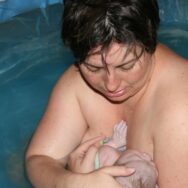
Facilitates mobility and enables the mother to assume any position which is comfortable for labor and birth Speeds up labor Reduces blood pressure Gives mother more feelings of control Provides significant pain relief Promotes relaxation Conserves her energy Reduces the need for drugs and interventions Gives mother a private protected space Reduces perineal trauma and eliminates episiotomies Reduces cesarean section rates Is highly rated by mothers – typically stating they would consider giving birth in water again Is highly rated by experienced providers Encourages an easier birth for mother and a gentler welcome for baby Placing a pool of water in a birth room changes the atmosphere immediately. Voices get softer, the mother stays calmer and everyone becomes less stressed. The effect of buoyancy that deep water immersion creates allows spontaneous movement of the mother. No one has to help the mother get into a new position. She moves as her body and the position of the baby dictate. Movement helps open the pelvis, allowing the baby to descend. When a woman in labor relaxes in a warm deep bath, free from gravity’s pull on her body, with sensory stimulation reduced, her body is less likely to secrete stress-related hormones. This allows her body to produce the pain inhibitors-endorphins-that complement labor. Noradrenaline and catecholamines, the hormones that are released during stress, actually raise the blood pressure and can inhibit or slow labor. A laboring woman who is able to relax physically, is able to relax mentally as well. Many women, midwives, and doctors acknowledge the analgesic effect of water. Thousands of these mothers state they would never be able to consider laboring without water again. from Waterbirth...
Read MoreWater During Labour & Birth
Options for labour and birth have expanded over recent years. You can choose between different health care providers and different birth places. You can choose an active birth, a Leboyer birth and now you can choose a waterbirth. The use of water has become increasingly popular as a way of avoiding a high tech birth both in hospital and at home. While the use of water during labour is common place, giving birth to a baby under water is more controversial. A woman can use water during labour and birth in a number of ways. These include: A shower Hot towels Submerging in a bath Submerging into a deep pool of water Some women feel very comfortable in the water during labour and decide to stay in the water to give birth. Giving birth under water raises many questions – How safe is it? Does research support waterbirth? Does water provide effective pain relief? What precautions should be used if a woman labours and/or gives birth in water? Water, as with many issues during pregnancy and birth, is not very well researched. There needs to be a lot more research before we can accurately answer these and other questions. Some evidence however, is slowly gathering from around the world on the use of water during labour and birth. In the future we will know a lot more. Waterbirth concerns many people. One common fear is that the baby will drown if born into water. The baby born into water has a diving reflex that helps prevents the inhalation of water into its lungs. Once the baby is exposed to air the receptors in the baby’s face trigger the baby’s breathing. Because of these factors, once the baby is born into water it should be brought gently to the surface and the baby’s face must not be resubmerged under the water. To make sure that the baby does not get cold after the birth – the baby’s body can stay under the water and the baby’s head can be dried with a warm towel. If the baby is well he/she can stay with the mother in the water. Whether or not to permit the placenta to be born in the water is another controversial issue. There are some theoretical risks to remaining in the water, however none have ever been proven. Some health care practitioner encourage women to leave the water for the third stage of labour while others are happy for women to remain in the water. If bleeding after the birth seems excessive the woman would be asked to leave the water. I have heard that using water during labour is helpful, can you explain the reasons why? Using water during labour and birth encourages: Reduction in pain Greater mobility that comes with buoyancy Induces relaxation Reduction in abdominal pressure Softening effect on the perineum and vulva can promote stretching during crowing Gentle entrance into the world for the baby One of the most common finding of research is that many women find that being submerged in water enables them to relax and they find the pain of labour lessens. In one study, where women used water during labour only, they found that 80% of the women reported that they would like to use water next time they were in labour. I like the idea of using water during my labour. I would like to know if it is safe for my baby to be born underwater? Until more research is completed, we cannot say with any accuracy whether there are any risks associated with the use of water during labour and birth. The limited evidence that is available so far indicates that waterbirth is thought to be safe so long as some simple, sensible guidelines are followed. These guidelines include: A skilled practitioner in waterbirth is available The pool or bath has been thoroughly cleaned and rinsed A normal labour and birth is expected. The use of water is not appropriate if a woman has a fever, there is meconium in the waters, the baby’s heart rate...
Read MorePostpartum Care – What to Expect
Though pregnancy changes your body in many ways, sometimes the most dramatic changes happen after delivery, during the postpartum period. Here’s what to expect. Painful perineum Your sensitive perineum has been stretched to the limit and it may possibly have been bruised or torn. If it has been cut into, it’s bound to smart. Ask the nurse to instruct you on “peri-care”. Heat increases blood flow and promotes healing; cold numbs pain and decreases swelling. Both measures are necessary to heal a traumatized perineum. The nurse will tuck an ice pack up against your perineum as soon as possible (it will feel so good). She will advise you about soaking in a warm sitz bath (or the tub) and show you how to squirt warm or cool water over your perineum, using a peribottle. Soothe the wound. Spray menstrual pads with either water, witch hazel mixed with water, or perineal wash, squeeze out the excess and put them in the freezer—the cool temperature will feel amazing to your tender perineum. Change and replace as needed. Prevent pain and stretching during bowel movements. Hold a clean pad firmly against the wound and press upward while you bear down. This will help relieve pressure on the wound. Sit down carefully. To keep your bottom from stretching, squeeze your buttocks together as you sit down. If sitting is uncomfortable, use a doughnut-shaped pillow to ease the pressure. Do your Kegels. These exercises help tone your pelvic floor muscles. Simply tighten your pelvic muscles as if you’re stopping your stream of urine. Starting about a day after delivery, try it for five seconds at a time, four or five times in a row. Repeat throughout the day. Look for signs of infection. If the pain intensifies or the wound becomes hot, swollen and painful or produces a pus-like discharge, contact your health care provider. Vaginal discharge You’ll have a vaginal discharge called lochia for up to eight weeks after delivery. Expect a bright red, heavy flow of blood for the first few days. If you’ve been sitting or lying down, you may notice a small gush when you get up. Don’t be alarmed if you occasionally pass blood clots. The discharge will gradually taper off, changing from pink or brown to yellow or white. To reduce the risk of infection, use sanitary napkins rather than tampons. Contact your health care provider if: You soak a sanitary pad every hour for more than two hours You feel dizzy The discharge has a foul odor Your abdomen feels tender You pass clots larger than a golf ball You have a temperature of 100.3 F or higher Contractions During the first few days after delivery, you may feel contractions sometimes called afterpains. These contractions help prevent excessive bleeding by compressing the blood vessels in the uterus. Afterpains tend to occur when you’re breast-feeding and seem to be more noticeable with second or third babies. Medications used to control hemorrhaging after delivery can increase afterpains as well. Usually these pains resemble menstrual cramps. If necessary, your health care provider may prescribe pain medication. Many medicines are safe even if you’re breast-feeding. Contact your health care provider if you have a fever or if your abdomen is tender to the touch. These signs and symptoms could indicate a uterine infection. Difficulty urinating Swelling or bruising of the tissues surrounding the bladder and urethra may lead to difficulty urinating. Fearing the sting of urine on the tender perineal area may have the same effect. To encourage urination, contract and release your pelvic muscles. It may help to place hot or cold packs on your perineum, straddle the toilet like a saddle or use a peribottle to pour water across your perineum while you urinate. Difficulty urinating usually resolves on its own. Contact your health care provider if it hurts to urinate or if you have an unusually frequent urge to urinate. These may be symptoms of a urinary tract infection. Leaking urine Pregnancy and birth stretch the connective tissue at the base of the bladder and may cause nerve...
Read More

Recent Comments
No comments to display