


Featured
Birth Plan Basics

Once unheard of, it is now routine to hear “this is a copy of my birth plan” as a woman is admitted to L&D. There is a lot of info (and opinions) out there about birth plans. This post is intended as a primer to get you pointed in the right direction. Often explained as a document outlining how you wish your childbirth experience to go, the birth plan is much more: The birth plan is way to prepare for your birth: properly prepared, it will require discussion with your care providers and likely personal research and reading. It will allow you to seriously consider how you feel about medications, interventions, procedures, and yes, emergency situations should they arise. It will give you an opportunity to talk with your partner about his/her hopes and fears and to communicate about what is important to you both. The birth plan is a communication tool: hopefully it will clearly and succinctly spell out your wishes and expectations not just for your childbirth experience, but for the safety of your baby and yourself. It can function as a reminder to your care provider of things you may have talked about weeks before. The birth plan can have the power to speak for you despite staff shift changes, whether or not you have an advocate there for you (partner, family, friend or doula) and whether or not you are in a condition to speak for yourself. The birth plan is not a frivolous wish list: it is a simple one page statement outlining what you are ok with and what you are not ok with. Birth plan detractors seem to feel that a birth plan reflects a selfish mom’s over-attachment to her own experience. However, we all have the right to informed consent when it comes to medical procedures and your birth plan should focus on this aspect rather than getting caught up in small details like whether or not you want to have your ipod in the room. The birth plan unfortunately is not a legal document: there will be hospitals and staff members and births where the birth plan does not get followed. Make sure to go over it with your care provider ahead of time. Is your care provider comfortable with the plan? Find out if the points you’ve made are even possible at the place where you are delivering – does hospital protocol even allow everything you’ve outlined? Bring multiple copies with you to give out. Be prepared for shift changes. Remember that circumstances might arise that you didn’t consider ahead of time and some parts of the plan might not get adhered to. The birth plan is not a road map: no one can really plan out their birth. Birth is almost always surprising in some way. It is hard not to get caught up in your vision of the ideal birth but birth is unpredictable. Remember to account for things you hope will not happen. The birth plan should not become a way to cling to control. Carefully consider the points on your birth plan and thoughtfully write it out. And then, hand it to your partner and let go of the plan so you can embrace the unknowable aspect of birth. Resources Here are a couple of good online birth plans to check out. You can fill them out online to print and take with you, or just use them as a sample or starting point to write your own. Pregnancy Channel Childbirth.org Earth Mama Angel Baby And finally, a couple of great books to get you started on your research: Creating Your Birth Plan – The Definitive Guide to a Safe & Empowering Birth Marsden Wagner, M.D., M.S. Creating Your Birth Plan helps expectant mothers make informed decisions about the assistance they’ll require for childbirth. Designed to encourage collaboration between pregnant women and their caregivers, it includes information on: What to expect when delivering in a hospital, in a birthing center, or at home How to select an advocate to ensure expectant mothers’ wishes are honored...
Read MoreConnecting with your Community

Parenting can be lonely. Your lifestyle changes drastically. Perhaps you are the first in your circle of friends to have children. Perhaps you are surprised by the isolation of maternity leave. Perhaps you long for a real connection with other parents rather than those conversations where you pretend it’s not as hard as it is. Perhaps you find the playground intimidating. Most parents agree that parenting is both the hardest and most fulfilling job they’ve ever held. You can try your hardest to prepare yourself but no amount of reading, observing and talking to other parents can prepare you for it. Parenting transforms your life to the place where you can’t imagine your life before children. And suddenly you find yourself relishing conversations about the minutiae of raising children. It just isn’t the same without a community to share it with. So what can you do to foster that need for community? Check out these articles on community: Finding Your Tribe: Feed Your Soul while Feeding Your Kids – an article from Mothering Magazine on creating a parenting community for yourself. Longing For Community – Natural Parenting guru and former Mothering Magazine editor Peggy O’Mara’s thoughts on community. Create a Date Night Group Join up with 3 other families and start babysitting each others’ kids. Each week one family watches all the kids. The other 3 couples get date night. So 1 Friday per month you might have a mad-house full of kids—the other 3 Fridays you get to be alone with your partner! And as the years pass, the kids will entertain each other and all you’ll have to do is make sure they are safe. Start a Book Club or a Knitting Night Find a group of parents and read parenting books to discuss at a potluck. Have older kids? Start a book club and invite the kids like the Mother/Daughter book club The Page Turners in the November/December 2008 issue of Mothering Magazine. Always knitting? Start a knit night with other moms. Rotate meetings so each family takes a turn hosting. Team Up Commit to regular check ins with another mom so you can encourage and support each other with your parenting challenges and triumphs. Agree to call each other once a week just to see how it’s going. Find a parent with older kids who is willing to act as a mentor to you. Check in regularly (once a week or once a month). Read the book The Mother’s Guide to Self-Renewal and if you’re in BC join a Mama Renew...
Read MoreBirth Choices – what is right for you?

Today we have more choices than ever about how we birth. We have the choice of using a doctor or midwife for our practitioner. We have the choice of birthing in the hospital or at home. We can choose who is present at the birth. We can choose to hire a doula. We can choose between a multitude of prenatal classes ranging from hospital-run classes to private classes in Lamaze, the Bradley method or Birthing From Within. We can enroll our older children in Sibling Preparation classes, we can take prenatal yoga or prenatal pilates, we can bring music, pillows and massage oil to the hospital. We can choose to labour in the tub or the shower or on a birth ball. We can play cards or go for a walk. We can birth squatting or standing or via elective cesarean. We can even write up elaborate detailed lists of all of our preferences and give this Birth Plan to our practitioners. Faced with all of these choices, how do you know what is right for you? How do you know that the choices you made before the big day will still be right when labour starts – especially if you are a first time mom? Choice, in general, can be a double-edged sword. On the one hand, it is empowering and enriching to be given the opportunity to have a say in what happens to us. On the other, given too many choices or inadequate information to help in our decisions, the process of choosing can cause stress, anxiety and even guilt and depression. And when it comes to birth, it can give the misguided impression of control. Relinquish Control (even those subconscious thoughts…) The first thing you can do on your journey towards the right birth for you is to forget about those fantasies of your ideal birth. We all do it: we all have a vision in our heads of the way we hope our birth will proceed. These visions are rarely realistic (unless you imagined in your ideal birth that you would be half-naked on your hands and knees in a roomful of strangers). Birth is a dynamic process and we cannot control what happens. The woman who is determined to get her epidural before she’s finished with the hospital admitting desk may deliver baby at home in the bathroom attended by her partner. The woman who preaches natural birth from before conception may end up with a complication, or labour induction and a cesarean delivery. We’ve all read these stories and hoped it wouldn’t be us. But it could be. So the first step is to let go. Read everything you can get your hands on Knowledge is power. If you aren’t a reader, ask questions. Ask all the mothers you know what their experience was like. Ask your practioner all those nagging questions you’re afraid to speak out loud. Explore all the birth possibilities there are. Don’t shy away from those topics that you hope you won’t have to face (like having a long, drawn out back-labour or requiring a cesarean). Don’t write off ideas that are new to you (like homebirth, or hiring a doula). The more you can understand about the way labour progresses (or sometimes doesn’t) and the way labour is managed (or sometimes mis-managed), the better the chance that you will be able to play an active part in the process. Be Flexible (but know your limits) That is, be prepared to change your mind. Something that seemed right before birth may no longer be fitting during birth. Hell, something you asked for during one contraction, may not be what you want during the next. Accept the fact that you may need to revise your thinking in the face of new information. However, if at any time, you are uncomfortable with the care you are receiving, be confident that it is okay to assert yourself or have some intervene on your behalf. By trusting your instincts and your birth team, you’ll know when to stand your ground and when...
Read MoreVoices: What Story is Your Birth Story Really Telling?

I recently had the opportunity to share the story of my son’s birth with a university class on Child Development during Infancy (conception-3 years). The students are in their early twenties and many had never seen a birth before nor had any prior exposure to the basics of childbirth. As I wrote out my story, I became increasingly aware that I couldn’t just tell it the way I remembered it. I had to bear in mind that the students would be forming impressions about childbirth from my words. I had an opportunity to cut through the noise of birth as pain and talk about what else it can be, beyond just a physical experience. I realized that to be taken seriously I would need to acknowledge that birth IS painful but I also decided to focus on the experience itself: preparations, perceptions, emotions. I spoke about why I chose to have a homebirth in a rational way so that my words would not be brushed aside as those of someone “brave” or “radical.” I had to make very calculated decisions about what to say and what not to say and I got to thinking about the stories our birth stories really tell. Is it a story of fear, pain, control, joy, courage, triumph, peace, dignity, sorrow? Do the details we give and the words we use convey what we intend? Are we aware of our audience when we casually explain about the day we gave birth? Do we pay attention to the fact that there might be a young pre-teen girl there who is soaking it up? What do we want listeners to take away from our tales? In a culture where birth is a medical event, we owe it to future families to tell a positive empowering story if we can. Young women today are bombarded with stories on tv and in the media of childbirth as being so painful and dangerous that the only way they will get through it is by putting their trust in the authorities, giving up the power in their bodies and taking the multitude of drugs offered to manage their birth safely. We can help shape future mothers’ perceptions of birth by carefully choosing our words when we talk about ours. Regardless of the circumstances—whether it was a blissed out waterbirth or a cesarean for breech presentation—we are the ones who tell our stories. We can choose to be positive and inspiring or to instill fear and dread. It’s your...
Read MoreRecipe for a Gentle Birth
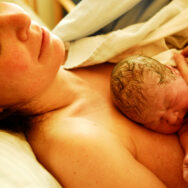
Have you ever wondered what exactly people are talking about when they say “gentle birth”? From the way our culture talks about birth, there doesn’t seem to be much about it that is gentle. This week, I’ve been re-reading Barbara Harper’s Gentle Birth Choices – A Guide to Making Informed Choices and would like to share with you some of her suggestions for a birth that’s gentle on mom and baby. Barbara Harper is a former nurse who went on to form Global Maternal/Child Health Organization and Waterbirth International following the births of her children. She lectures around the world on maternity care reform and describes gentle birth like this: “A gentle birth begins by focusing on the mother’s experience and by bringing together a woman’s emotional dimensions and her physical and spiritual needs. A gentle birth respects the mother’s pivotal role, acknowledging that she knows how to birth her child in her own time and in her own way, trusting her instincts and intuition. In turn, when a mother gives birth gently, she and everyone present acknowledge that the baby is a conscious participant in his or her own birth. The experience empowers the birthing woman, welcomes the newborn child into a peaceful and loving environment, and bonds the family.” I love this description of a gentle birth because on the one hand, it seems so simple and obvious that we should be respectful and gentle with the two main participants in any birth: mother and child. Yet, on the other hand, it highlights for me how rarely this happens in our high-tech culture and how difficult it is for many women to achieve a gentle birth. What are some simple, practical suggestions for a gentle birth? 1. Preparation In the past, preparation would have probably included talking to older experienced women in your community: your mother, grandmother, aunts, older sisters, and probably witnessing a birth or two before you had to do it yourself. Nowadays, some key aspects for preparation are: choosing a childbirth educator that trusts birth and brings a positive attitude to their classes taking care of your body: getting adequate rest, exercising, eating well remaining open-minded and flexible about how your birth might unfold taking an honest hard look at your attitudes, beliefs and fears about birth 2. A Reassuring Environment The human body is designed with some wonderful pain management chemicals called endorphins that are triggered by the contractions of the uterus. The stronger the contractions, the more endorphins are released. Working in direct opposition to endorphins is adrenaline. Adrenaline is triggered by fear and stress. It prepares us for the fight or flight response by tensing our muscles for action. It is the anti-thesis of staying relaxed and letting your endorphins do their job. One key way to help a laboring woman cope with pain is to keep her relaxed and confident. This can prove difficult if she is surrounded by busy attendants, beeping machines, scary looking resuscitation equipment and ticking clocks. 3. Freedom to Move It is vital that a woman be able to move about during labour, to adopt whatever position she needs to birth her baby instinctively. Lying on her back is more painful and unlike more upright positions (kneeling, squatting or leaning on furniture or a support person), she is working against gravity to deliver baby. Moving around during labour helps baby to readjust and descend and keeps mother actively participating in the process. 4. Quiet Keeping the birth room quiet is essential. Partners, support people and birth attendants must respect the mother’s need to focus. Each woman deals with contractions in her own way but it’s absolutely important that she be able to concentrate. Quiet also fosters a sense of intimacy and baby’s transition into a world full of sound is much less jarring. 5. Low Light Turning the lights down or off has much the same effect as turning down the volume. Mother feels calmer and more relaxed. The room becomes comforting and intimate. Baby is more relaxed and alert, able to open his eyes and...
Read MoreThe Bee Movie

Sometimes I use really big words when I talk to my three year old. Sometimes I can be a little long-winded for a preschooler. The Bee Movie made a huge impression on Rain. He thinks his striped pj’s are a pollen jock suit. One of the villians is Ken, Vanessa’s boyfriend and Barry the Bee’s rival. He is one angry fella and there’s a scene where he tries to flush Barry down the toilet. Rain was terrorized by this, screaming, shaking, crying. Yikes. After that, whenever we watched the movie, we had to skip every single scene with Ken, even the tamer ones. My mom explained to Rain that the reason Ken didn’t like bees was because he was allergic. This was true and I told her “that would have be a lot easier than what I told Rain.” Mom: Why? What did you tell him? Me: Uh. I said that Ken was really selfish and all he ever did was think about himself and as a result he had no friends and that made him very lonely and angry. Too...
Read More

Recent Comments
No comments to display