


Posts Tagged "baby"
Attitude Adjustment
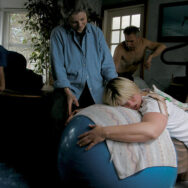
Remember: if something is hard to do, then it’s not worth doing. — Homer J. Simpson I have often laughed about this quote partly because it’s true for me in some ways, and partly because I know to laugh at myself. I have never thought of myself as strong. I’ve hovered around 110 Lbs since my mid-teens. I wasn’t on the basketball team in high school. I’m not athletic. I get winded running around the block. And sometimes taking the stairs at work (though I still do it). I’ve never thought of myself as someone you’d ask to carry heavy boxes when you move. Or as someone who just keeps at it no matter how tired. That’s more like my husband. And that’s why I married him. When I was pregnant with my son, back in 2005, I took a Birthing From Within childbirth prep class and we spent one beautiful, sunny, Sunday morning in August talking about and crying about our worst fears about labour. Mine was pretty much that I just don’t have it in me to do something that physical for that long, that I would give up. I was afraid not only that I wasn’t strong enough but also that I just didn’t have the attitude to get me through. I had heard that quote about “having a baby is hard work. That’s why they call it labour” and while I appreciate it, it kind of scared me more than all the media hype about pain. But you know what? Guess what I’ve done in the last five years? I’ve made and grown another human being inside my body. Twice. I’ve pushed a baby out of my body without any pain relief medication or extraction methods. Twice. I’ve fed and kept a child alive and thriving for six months with my body alone. Twice. It turns out that my body is pretty damn strong and amazing. I did all this without training. Without special exercise or diet for the most part. I mostly ate the way I always eat. I took prenatal vitamins regularly the first time and when I remembered the second time. I did some prenatal yoga during my first pregnancy. I had awesome fans and a couple of great coaches which helped a lot of course. But I didn’t practice pregnancy or labour or birth or breastfeeding. I just did it. Because my body is made to do it. It turns out that I wasn’t just wrong about having a strong body. I was also dead wrong about my mind and my attitude. Or rather, by the time it really mattered I found out that I was wrong about my attitude. Before the contractions hit and around transition when I was telling myself to go to the hospital for an epidural, I still had some serious Homer attitude. But somehow I didn’t quit. What made the difference? When I look back, I realise that I was training and practicing and working hard getting ready to have a baby, breastfeed a baby and become a parent. I was preparing my mind for a mental marathon and I was adjusting my attitude. The yoga, the childbirth class, journaling, reading, learning: all of those were my training, my practice. It turns out that all of those are what helped me do what I needed to do. And for the rest, my body just did it’s thing because that’s what it is meant to do. Turns out that I’m more Winnie the Pooh than Homer Simpson: There is something you must always remember. You are braver than you believe, stronger than you seem, and smarter than you think. — Winnie the Pooh **photo: The hard work of labor, Flickr,...
Read MoreMy birth stories
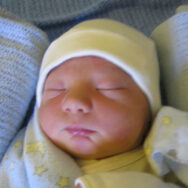
I believe that a lot of good can come from people who find the positive in their birth experience and share it with, well, anyone who will listen. This is an age where between 1 in 3 and 1 in 4 births occur by cesarean. Most women never experience birth before they find themselves in labour. Our society has very little practical experience with normal birth and we are afraid. But there is a rising tide of people who know that birth needn’t be treated like a disease or a medical emergency waiting to happen. There is a growing movement that is shouting and stomping feet and demanding maternity care reform. Change is coming and I sincerely believe that the day will come when we have the best of both worlds: the safety of modern medicine and the sanctity of trust in our bodies and the birth process. That change starts every time someone tells a positive birth story that empowers women to learn more and fear less. I was born at home in the Yukon in the 1970’s. I am so thankful to my parents for this gift: opening my eyes to the beauty of home both that very first time, and again when I birthed my son into my home as an adult. I am grateful for my mother’s dutch doctor who, at my older brother’s birth, showed her that maternity care didn’t have to look like the standard North American medical model, a man who brought new ideas to a prairie town on a new continent and changed the course of birth in my family. Both of my children were born at home with midwives in attendance. Neither birth went exactly as I’d hoped it would. My first resulted in a hospital transfer for retained placenta. My second caught us unprepared three weeks early and ended up being a neighbourhood event. I had envisioned quiet and intimate, not neighbours in the kitchen eating pizza. But when a 10 year old boy who had just seen my hour old daughter exclaimed “This is the best birthday party I’ve ever been to!” I saw the power of sharing positive experiences with everyone around us. Maybe when this boy becomes a father he will remember, just as I remember my mother’s dutch...
Read MoreOpen Letter to BC Homebirth Study Critics

Dear Uniformed Commenter After reading the newest study on the safety of homebirth, I sat back to read some reactions from the press and the public. I had a look at the CTV coverage and the CBC coverage and I read over the comments in reply to each story. Imagine my dismay when I read some of your reactions! I was rather glad that the comments were closed because I was too upset to post anything coherent or cool-headed. Frustrated, I can not stop thinking about your replies. First, I shake my head as it appears that you’ve neither read the study nor understood the very article you’ve responded to. You seem to have missed the point entirely. Your arguments fall into one of several categories: 1. The Personal Anecdote Rebuttal This is some variation of “I can only imagine how horrible our child’s birth would have turned out if we had tried to have a home birth” and then launching into your personal story where everything was touch-and-go but thankfully the medical staff at the hospital saved your baby. First of all, this is not a logical rebuttal to a scientific study. This is an emotional reaction known as a pathetic appeal. You are rejecting “a claim based on how it makes you feel without fully analyzing the rationale behind the claim”. You are appealing to people’s very real emotions about the health and safety of a tiny baby at the expense of being able to actually hear what the study’s authors are trying to tell you. While it is totally understandable that this is an emotionally sensitive topic for many, the problem is that you are overemphasizing the emotional component at the expense of the message (the logical component) – this is a flawed argument. Effective, yes – ad campaigns do it all the time, but flawed nonetheless. Secondly, while my heart goes out to you that you had a difficult and scary time at the birth of your baby and while I’m glad that modern medicine was able to save your baby, we can’t actually compare your situation with that of the study subjects. We have no way of knowing with the few details you’ve given if your particular circumstances would have made you an eligible sample for the hospital group. Perhaps you had complications or a high-risk pregnancy that would have excluded you from the study. Therefore, sadly, your situation is not a relevant point of comparison for a study that was looking at births fitting very specific criteria. If that is the case, even the study’s authors, home birth advocates, the BC College of Midwives etc. would all agree with you: your child’s birth should not have occurred at home because it did not meet the criteria to have a home birth safely. 2. The What If Question This argument boils down to “Yes, homebirth is fine as long as nothing goes wrong. But why chance it?” You have missed the point completely; the study concluded that home birth is as safe as hospital birth because in all the cases studied, virtually nothing did go wrong. The perinatal death rate was the same as for both hospital groups (in fact, it was marginally lower in the homebirth group). This what-if-something-goes-wrong argument was essentially what the study was trying to find out – how often does something go wrong at home? And the conclusion was, provided certain guidelines are followed: no more often than something goes wrong in the hospital. 3. The Get With The Times Blow Off This argument is the most uninformed of the bunch. You demonstrate your complete lack of understanding of maternity care and midwifery with variations of “Midwives are old hippies with no training and would be useless in an emergency” or “Stop being so full of yourself and your need to prove something – modern medicine is here for a reason, use it.” This brand of reaction is intended to silence anyone supportive of homebirth by insulting and denigrating but it only demonstrates your own ignorance. Midwives, in BC...
Read MoreSix Week Check-Up

Do you have new first time parents in your life? You’ve probably gotten them a gift and visited to meet the new wee one. You’ve probably puzzled over what a new family needs and how to help out. There are lots of great ideas out there. Here’s one I particularly liked as it really rang true for my experience as a new parent. To take it one step further, I’d like to challenge everyone out there to do the Six Week Check-up. That is, make a point of checking in with the new mom as her baby nears the six week mark. Why Six Weeks? Do you remember the six week check up after you had your first baby? Do you remember what else was going on for you then? Maybe you haven’t had kids yet or maybe your kids are older and now that you’ve left the sleep-deprived haze, those early days are all a blur. Let me remind you: The first few weeks were all bliss, staring at baby in awe, proudly presenting her to family and friends, feeling totally bonded to your partner for producing this perfect little angel. But now? Dad has gone back to work. The whirlwind of out-of-town visitors is slowing or they’ve all come and gone. Friends and family have all met baby and are back to their regular lives: working, house renos, family vacation. The new baby celebrations have all ended: the baby shower or meet the baby party was a few weeks ago. Friends are no longer dropping in with a cute onesie or yet another handmade blanket. The email congratulations have tapered off. In short, everyone else’s excitement has worn off. For them, now it’s business as usual. For mom? She’s home alone with baby and the reality of her new life is finally starting to hit her. This likely means getting used to the isolation of maternity leave. The first few weeks felt like a well-deserved vacation, especially after the aches and pains and fatigue of working while pregnant. But now, she’s kind of bored. She’s surprised by how much she misses talking to adults when she’s staring at the four walls and nursing AGAIN. She’s surprised by how much she misses the noise of the office (or the restaurant or the store or wherever it was for her) when she realises how quiet it is at home alone while her friends and partner are at work. When she sees her friends, she realizes she has surprisingly little to talk about now that she can’t talk about her work. She wonders what to do with herself and she misses that productive self, that woman who excelled at her work. It’s lonely and she feels a little lost in a culture that defines people by the work they do. After the standard first few weeks rest and recovery, she was feeling great and tried to get back to her normal routine, only to find that she’s still exhausted. Mama’s beginning to realise that her plans of continuing life as before with baby in tow might be a little unrealistic. Her thoughts of tackling some of those crafting projects gathering dust during her “year off” seem laughable now as she struggles to sleep enough, keep the house clean, shower and eat lunch. By 6 weeks, the new family is likely out of the extra freezer food they prepared before the birth and friends are no longer dropping off casseroles. Offers to throw a load of laundry in or pick up groceries while new mom grabs a nap have petered out. Mom’s learning to navigate the grocery store with baby (and all the baby gear) now. Every day is a list of laundry, nursing, diapers, nursing, napping, nursing, dishes, nursing, more laundry, more nursing, more diapers. She’s surprised at how little she accomplishes and she might be starting to get run down around the 6 week mark because she’s trying to do too much. Back to regular life? Not exactly. At 6 weeks, baby often goes through a growth spurt (also...
Read MorePostpartum Care – What to Expect
Though pregnancy changes your body in many ways, sometimes the most dramatic changes happen after delivery, during the postpartum period. Here’s what to expect. Painful perineum Your sensitive perineum has been stretched to the limit and it may possibly have been bruised or torn. If it has been cut into, it’s bound to smart. Ask the nurse to instruct you on “peri-care”. Heat increases blood flow and promotes healing; cold numbs pain and decreases swelling. Both measures are necessary to heal a traumatized perineum. The nurse will tuck an ice pack up against your perineum as soon as possible (it will feel so good). She will advise you about soaking in a warm sitz bath (or the tub) and show you how to squirt warm or cool water over your perineum, using a peribottle. Soothe the wound. Spray menstrual pads with either water, witch hazel mixed with water, or perineal wash, squeeze out the excess and put them in the freezer—the cool temperature will feel amazing to your tender perineum. Change and replace as needed. Prevent pain and stretching during bowel movements. Hold a clean pad firmly against the wound and press upward while you bear down. This will help relieve pressure on the wound. Sit down carefully. To keep your bottom from stretching, squeeze your buttocks together as you sit down. If sitting is uncomfortable, use a doughnut-shaped pillow to ease the pressure. Do your Kegels. These exercises help tone your pelvic floor muscles. Simply tighten your pelvic muscles as if you’re stopping your stream of urine. Starting about a day after delivery, try it for five seconds at a time, four or five times in a row. Repeat throughout the day. Look for signs of infection. If the pain intensifies or the wound becomes hot, swollen and painful or produces a pus-like discharge, contact your health care provider. Vaginal discharge You’ll have a vaginal discharge called lochia for up to eight weeks after delivery. Expect a bright red, heavy flow of blood for the first few days. If you’ve been sitting or lying down, you may notice a small gush when you get up. Don’t be alarmed if you occasionally pass blood clots. The discharge will gradually taper off, changing from pink or brown to yellow or white. To reduce the risk of infection, use sanitary napkins rather than tampons. Contact your health care provider if: You soak a sanitary pad every hour for more than two hours You feel dizzy The discharge has a foul odor Your abdomen feels tender You pass clots larger than a golf ball You have a temperature of 100.3 F or higher Contractions During the first few days after delivery, you may feel contractions sometimes called afterpains. These contractions help prevent excessive bleeding by compressing the blood vessels in the uterus. Afterpains tend to occur when you’re breast-feeding and seem to be more noticeable with second or third babies. Medications used to control hemorrhaging after delivery can increase afterpains as well. Usually these pains resemble menstrual cramps. If necessary, your health care provider may prescribe pain medication. Many medicines are safe even if you’re breast-feeding. Contact your health care provider if you have a fever or if your abdomen is tender to the touch. These signs and symptoms could indicate a uterine infection. Difficulty urinating Swelling or bruising of the tissues surrounding the bladder and urethra may lead to difficulty urinating. Fearing the sting of urine on the tender perineal area may have the same effect. To encourage urination, contract and release your pelvic muscles. It may help to place hot or cold packs on your perineum, straddle the toilet like a saddle or use a peribottle to pour water across your perineum while you urinate. Difficulty urinating usually resolves on its own. Contact your health care provider if it hurts to urinate or if you have an unusually frequent urge to urinate. These may be symptoms of a urinary tract infection. Leaking urine Pregnancy and birth stretch the connective tissue at the base of the bladder and may cause nerve...
Read More

Recent Comments
No comments to display