


Posts Tagged "breastfeeding"
Recipe for a Gentle Birth
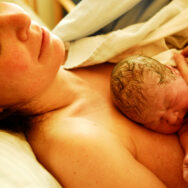
Have you ever wondered what exactly people are talking about when they say “gentle birth”? From the way our culture talks about birth, there doesn’t seem to be much about it that is gentle. This week, I’ve been re-reading Barbara Harper’s Gentle Birth Choices – A Guide to Making Informed Choices and would like to share with you some of her suggestions for a birth that’s gentle on mom and baby. Barbara Harper is a former nurse who went on to form Global Maternal/Child Health Organization and Waterbirth International following the births of her children. She lectures around the world on maternity care reform and describes gentle birth like this: “A gentle birth begins by focusing on the mother’s experience and by bringing together a woman’s emotional dimensions and her physical and spiritual needs. A gentle birth respects the mother’s pivotal role, acknowledging that she knows how to birth her child in her own time and in her own way, trusting her instincts and intuition. In turn, when a mother gives birth gently, she and everyone present acknowledge that the baby is a conscious participant in his or her own birth. The experience empowers the birthing woman, welcomes the newborn child into a peaceful and loving environment, and bonds the family.” I love this description of a gentle birth because on the one hand, it seems so simple and obvious that we should be respectful and gentle with the two main participants in any birth: mother and child. Yet, on the other hand, it highlights for me how rarely this happens in our high-tech culture and how difficult it is for many women to achieve a gentle birth. What are some simple, practical suggestions for a gentle birth? 1. Preparation In the past, preparation would have probably included talking to older experienced women in your community: your mother, grandmother, aunts, older sisters, and probably witnessing a birth or two before you had to do it yourself. Nowadays, some key aspects for preparation are: choosing a childbirth educator that trusts birth and brings a positive attitude to their classes taking care of your body: getting adequate rest, exercising, eating well remaining open-minded and flexible about how your birth might unfold taking an honest hard look at your attitudes, beliefs and fears about birth 2. A Reassuring Environment The human body is designed with some wonderful pain management chemicals called endorphins that are triggered by the contractions of the uterus. The stronger the contractions, the more endorphins are released. Working in direct opposition to endorphins is adrenaline. Adrenaline is triggered by fear and stress. It prepares us for the fight or flight response by tensing our muscles for action. It is the anti-thesis of staying relaxed and letting your endorphins do their job. One key way to help a laboring woman cope with pain is to keep her relaxed and confident. This can prove difficult if she is surrounded by busy attendants, beeping machines, scary looking resuscitation equipment and ticking clocks. 3. Freedom to Move It is vital that a woman be able to move about during labour, to adopt whatever position she needs to birth her baby instinctively. Lying on her back is more painful and unlike more upright positions (kneeling, squatting or leaning on furniture or a support person), she is working against gravity to deliver baby. Moving around during labour helps baby to readjust and descend and keeps mother actively participating in the process. 4. Quiet Keeping the birth room quiet is essential. Partners, support people and birth attendants must respect the mother’s need to focus. Each woman deals with contractions in her own way but it’s absolutely important that she be able to concentrate. Quiet also fosters a sense of intimacy and baby’s transition into a world full of sound is much less jarring. 5. Low Light Turning the lights down or off has much the same effect as turning down the volume. Mother feels calmer and more relaxed. The room becomes comforting and intimate. Baby is more relaxed and alert, able to open his eyes and...
Read More

Recent Comments
No comments to display