


Stop The Cycle – Cry It Out pt. 2
Posted on Apr 27, 2010 in Featured, Parenting | 19 comments
Last week at my local La Leche League meeting the topic for discussion was adapting to motherhood and one of the questions was “What did you to do to help your baby adjust to life outside the womb?” A young mother of a 2.5 month old baby responded by saying that she had let her baby cry and that it had been the good thing for him because now he is sleeping well. She went on to say that it had been terrible and that she herself had cried the first few times but that it had been the right thing to do.
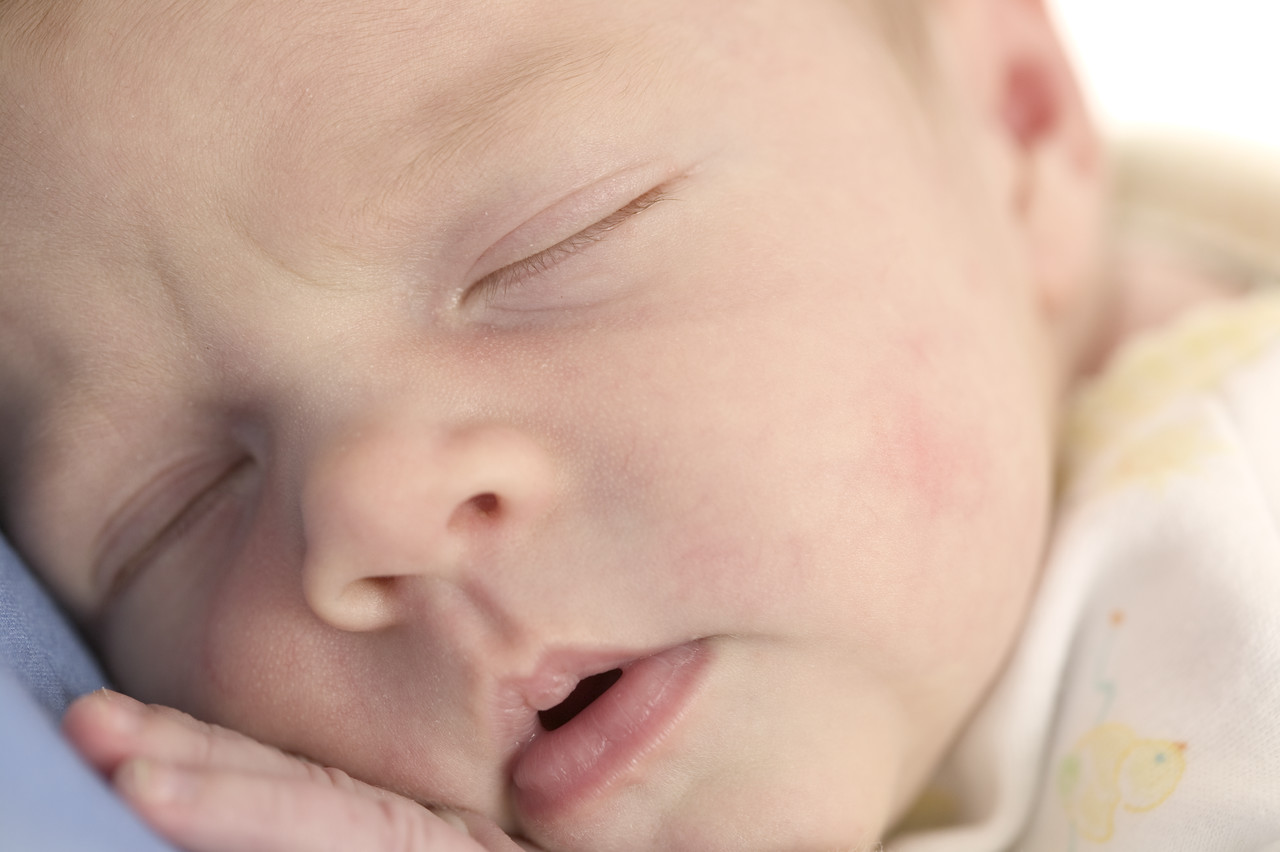
Considering the group, which was primarily made up of proponents of attachment parenting, the resulting discussion was incredibly supportive, thanks to the stealthy handling of our leader. She steered the conversation away from the specifics and toward the need to recognize that every baby is different, that every mom knows best what her baby needs and that we need to support each other in that. One of the other mothers piped up to say that she too had used sleep training with her baby and often felt judged for it. Some others brought up that they felt judged for going to their babies when they cried, and for not sleep training. Everyone reiterated that mothers know what is best for their babies.
I was impressed with how the situation was handled but I sat quietly through the entire discussion.
I am fervently opposed to crying-it-out (and you can read why here). I don’t believe it’s one of those minor parenting differences that we all have to accept each other on, like whether we cloth diaper or use disposables, whether we breastfeed for 12 months or 24, whether or not we use rewards for behaviour modification, or for that matter whether or not we use sleep training methods on older babies. I don’t believe that letting a 10 week old baby cry-it-out is just fodder for the mommy wars.
The cry-it-out (CIO) method is not a choice that families come up with of their own accord. I am fairly certain that if every family were left to their own devices, to trust themselves, to trust their babies, the cry-it-out method would die out because it goes against our very instincts. Every evolutionary biological maternal instinct we have tells us to go to, pick up, and soothe a baby who is crying.
This young mother said herself that it was terrible and she cried the first few times she tried the method. An article I read while researching this post reiterated that point:
The first night I cried for over an hour, long enough that my mom finally had to take a break and walk around the neighborhood while my dad kept watch.
Anecdotally, I hear that over and over from moms, even those who are huge supporters of CIO. We all seem to think that parents and babies have to toughen up, that if they all just suck it up for a few days (or weeks) they’ll be the better for it, because someone wiser and more experienced said that this is what we are supposed to do.
The only reason we continue as a society to use this method is because of pressures coming from outside the walls of our homes and I am beginning to think that we have a responsibility to stop this insanity.
You think it’s harsh to call it insanity? Try this perspective:
Leaving a baby to cry is a method that was popularized by doctors and paediatricians from the turn of the 20th century. This was a time when influential men like Luther Emmett Holt (1855 – 1924) and Truby King (1858-1938) were telling mothers that a strict schedule of feeding and sleeping should be kept. Their advice included encouraging regular bowel movements from the time the baby was younger than 2 months old by holding the baby over a basin and inserting soap suppositories, rubber tubing or an oiled cone into the baby’s rectum at the same time every day!!
This is from Holt’s book The Care and Feeding of Children (1894)1:
At what age may playing with babies be begun?
Babies under six months old should never be played with; and the less of it at any time the better for the infant.
What harm is done by playing with very young babies?
They are made nervous and irritable, sleep badly and suffer from indigestion and in many other respects.
…
Is there any advantage in having a child take its airing during the first five or six months in the nurse’s arms?
None whatever. A child can be made much more comfortable in a baby carriage, and can be equally well protected against exposure by blankets and the carriage umbrella.
Why do we see the folly in forcing regular bowel movements and feeding on a schedule, but not in leaving our babies to cry for hours? Why do we disregard a man’s belief in the harm of playing with or holding young babies but 116 years later still think he’s right about this:
How is an infant to be managed that cries from temper, habit, or to be indulged?
It should simply be allowed to “cry it out.” This often requires an hour, and in extreme cases, two or three hours. A second struggle will seldom last more than ten or fifteen minutes, and a third will rarely be necessary. Such discipline is not to be carried out unless one is sure as to the cause of the habitual crying.
Consider other things that were normal in the last century that we now think are outrageous:
Driving around with children in the backs of pickup trucks, infants without car seats
Promoting formula as a better alternative to breastfeeding because they knew exactly what was in it and could measure it
Smoking cigarettes as a cure for asthma

Cry-it-out is outdated, unscientific, and just plain bad advice. It is ridiculous advice from the same era as smoking for weight loss.
In 1928, Chatelaine advice columnist Stella E. Pines, RN, urged Canadian mothers to give birth in a hospital that trains newborns to sleep through the night right away so moms won’t miss out on much-needed sleep when they get home: “Nearly all babies cry for the first five or six nights. It does them no harm unless in excess. In fact the exercise helps to establish good lung capacity.” 2
That same year, Lucky Strike launched a marketing campaign instructing people to reach for a Lucky and pass up sweets as a way to avoid weight gain:

Don’t we think things have changed a bit in the last 100 years? Don’t we think there have been advances to the study of attachment, child development, the brain and sleep that are equal to the advances to medicine in the same time period?
No, we are told that letting our baby cry it out is normal, that it will work after a few nights and the baby will never remember. We are told that if we don’t do it, we are spoiling our babies, and they are training us. Right. Just like holding your baby would spoil it. And smoking cigarettes would cure asthma. And riding in a car with your baby on your lap was ok.
Cry-it-out advice comes from a time when women were told that they should not discuss the care of babies amongst themselves but should always defer to the knowledge of doctors who knew better than they.
Mothers were advised to listen to their doctors — and no one else — when it came to the health of themselves and their babies. “Avoid medical books as such reading is easily subject to misinterpretation, and may cause undue worry over minor symptoms. Your doctor is by far your best guide….Gatherings such as bridges and teas, are often occasions of unwise discussions as to the relative merits of doctors. After careful consideration you have chosen a doctor, therefore do not let yourself be influenced by those who are not qualified to advise….To be happy, you need to have complete confidence in your doctor. Anyone criticizing him to you (and at the same time in your condition) lacks discernment to say the least and should not be taken seriously.” (Ernest Couture, MD, The Canadian Mother and Child. Ottawa: Minister of Health and Welfare, 1st edition, 7th printing, 1947) 3
Whole generations of mothers did what the books said against their better judgment and intuition, and as a result, CIO persists. It is being passed down from generation to generation because we have lost touch with our real parenting instincts. It is being mistaken for folk wisdom and experience because it is the only thing the last four generations can remember. Though Holt and King have been dead and in their graves for 75 years, we still have our grandmothers, mothers, mother-in-laws, friends, and the old lady at the grocery store telling us that it works—despite the fact that every single one of these women wept hot tears and had to physically restrain themselves from going to their babies when they tried to implement this “expert” advice.
And here we are telling each other that we all know our own babies best and we can trust our instincts. We don’t want to make anyone feel guilty so we quietly sit by and perpetuate this terrible terrible advice. We think, “who are we to judge someone else’s choices?”
Maybe we have a responsibility to stop this cycle. Maybe we need to find a way to educate and inform families that Holt and King were WRONG. They were mistaken. They didn’t understand babies and attachment. We can’t blame them. They were living over 100 years ago. Science has advanced a lot since then.
But I don’t know how to bring this up to a young mom with a 10 week old infant without making her feel guilty, without making her feel attacked, hurt, judged, and confused.
I’d like to make a small comparison here.
Aside from a small percentage, the majority of women who are unable to breastfeed are unable to do so because of lack of societal acceptance for breastfeeding and due to lack of support from family, community, medical care providers and the workplace. Those are the factors I blame when a women tells me she was unable to breastfeed. When I encourage others to try to breastfeed or when I support public service campaigns, I don’t do this in judgment of her. I do it so that every woman has a chance at being successful in her attempts to breastfeed.
In the same way, I do not blame this mom for using cry-it-out on her baby. We’ve all been lead to believe that it works and that it’s a reasonable means of teaching a baby to sleep. She believes she is doing the best thing for her baby. She believed this because people have been telling mothers this for 100 years. I don’t blame her anymore than I blame the mother who can’t breastfeed. But I refuse to accept society’s perpetuation of myths that reinforce this harmful and misleading advice.
I don’t judge her parenting. But I still cry for her baby. And I cry for what she must have gone through those first few nights.
I think it’s high time that we were shouting from the rooftops that cry-it-out is not just one of many choices for night-time parenting. Cry-it-out was an unfortunate error in judgment that has been perpetuated for a century by well-meaning misguided parents. Imagine if we encouraged modern ways of caring for our infants instead of antiquated advice. Imagine if we stopped telling moms that they did the right thing when they left their house in tears because they couldn’t bear the sound of their babies screaming. Imagine if we truly encouraged mothers to follow their instincts instead of the books.
Sleep and breastfeeding are such loaded subjects. How do we educate without seeming to pass judgment? What do you think? Have you ever been in this situation? Do you think it’s ok to sit quietly by and accept cry-it-out as a choice?
- Read it online here. ↩
- Today’s Parent, A Motherlode of Advice, Ann Douglas ↩
- Squidoo, Parenting Books, Ann Douglas ↩
19 Comments
Trackbacks/Pingbacks
- Tweets that mention Stop The Cycle – Cry It Out pt. 2 | bluebirdmama.com -- Topsy.com - [...] This post was mentioned on Twitter by Childbearing Canada. Childbearing Canada said: Courting controversy - Do we have a…
- uberVU - social comments - Social comments and analytics for this post... This post was mentioned on Twitter by Childbearing: Courting controversy - Do we…
- Public Natural Parenting Creates a Culture of Positive Parenting Role Models - [...] for babies or mothers or both, and sometimes I have the urge to evangelize. I really believe that young…


This is fan-tas-tic! I agree with you about the difficulty in educating parents about CIO without making them feel guilty. I’ve encountered this in my LLL meetings too and it’s such a tricky subject. You don’t want to ostracize the mom but I also think it’s important to educate about such things. Where to draw the line? And the fact that letting a baby CIO is so unnatural and moms are wanting reassurance for doing such a thing. In a breastfeeding group where we talk about how natural breastfeeding is, which is a part of the reason, for me anyway, that makes it so right to do. Sorry if this causes any kind of uproar here, but I think swatting children is more natural than letting them CIO. I’m not an advocate for spanking by any means but I do think it comes more naturally to want to spank than letting our babies cry without going to them or comforting them. But I think society can only handle one child-friendly health issue at a time. First they’ll come to terms with breastfeeding being more natural and then they’ll open to discussion around CIO. Perhaps LLL should have an offshoot group that specifically deals with educating about sleep training methods. That’s a neat idea hey?
.-= Melodie´s last blog ..Missing: Long Lost Love =-.
Twitter: bfmom
Hmm…I think you’re right about society and too many child-friendly issues at once. Sleep support groups is a great idea!! Nice one.
“The cry-it-out (CIO) method is not a choice that families come up with of their own accord. I am fairly certain that if every family were left to their own devices, to trust themselves, to trust their babies, the cry-it-out method would die out because it goes against our very instincts.”
I agree! How many times have we heard parents admit to being hysterical while listening to their babies cry?! The psychological studies about the reactions our bodies show to babies crying is not some accident of nature – responding was how our species survived!
.-= Dionna @ Code Name: Mama´s last blog ..Dirt & Discipline =-.
Twitter: CodeNameMama
Exactly.
But unfortunately, I think the reality is that we listen more readily to people in our lives instead of studies. I don’t know how many studies will have to come out saying CIO is harmful before we stop listening to our friends, family and everyone else who says “just let them cry.”
Reading this, I totally agree with you. However, in practice, with a 5 1/2 month old who would not sleep more than 90 minutes at a time and only on my chest and only after 30-45 minutes of rocking, shushing, and singing, I had to do cry-it-out. I was in the midst of a horrible bout of postpartum depression brought on by sleep deprivation and I was literally out of options. After 2 nights of crying for about 30 minutes before sleeping, my daughter is now a 10 month old who sleeps 12 hours a night with very little if any protesting. Letting her cry honestly kept me from killing myself.
Even so, it’s something I admit to very few people because I feel so incredibly judged for it. My heart goes out to the person at the LLL meeting who said it. Everyone does the best they can for their kids.
My heart goes out to you Holli. I was in a similar position when my son was about a year. I also ended up with PPD and it was really hard. We ended up night-weaning him at 15 months using basically controlled crying or crying-in-arms and it was the hardest thing I’ve gone through parenting-wise. I’m sorry you feel judged when you talk about it. I would never want to make anyone feel that way. But I also wish that there more resources and support so that fewer parents needed to resort to CIO. All too often, CIO is the first suggestion from outsiders as soon as a parent starts struggling with sleep and that’s the part that bothers me.
Very well-written post. my son hated the crib from day 1, and so we shared a bed. It was beneficial for both of us, especially since i was breastfeeding and had to wake up every few hours to feed him. He would never sleep in a crib or playpen, and I was severely chastized by family members for letting him sleep with me. But i loved the snuggle time and so does he. i was a preemie and was in an incubator for three months. i have problems connecting with adults–either I attach too quickly or i don’t at all–and I’ve often wondered if my limited exposure to my mother at such a crucial period is the cause.
Finally, when he eas about seven or eight months old, i decided to try and sleep train my son to sleep in a crib for part of the night at least so he wouldn’t crawl out of the bed and hurt himself. He cried so hard he vomitted, and while I made half-hearted attempts to sleep train him over a period of 1.5 months or so, I eventually gave up because I could not listen to him cry and know he was suffering so.
Now at 15 months, he sleeps by himself for 12 hrs a night. So all those people who warned me he would be spoiled have no idea what they were talking about. Strangely, they are the same ones who commented on what an exceptionally calm, content, and happy boy my son is.
Lynette, that’s very interesting about your experience. Have you looked up long-term studies of preemies before? We touched on it in one of my Uni classes and I found it really quite fascinating.
We co-slept with my son until he was 3 and I loved the snuggle time too. I loved how I got all that extra time with him (even though he was sleeping). I often thought of our friends whose kids slept in their own cribs in their rooms and how my friends were seriously missing out on extra hours with their kids. They really do grow up so fast. I don’t get near that kind of time with him anymore now that he’s almost 5 and I’m so grateful I got to stock up when I could.
Great post! I wish I had seen this before I wrote up my post on the topic at the LeapFrog community blog (check out the comments on facebook if you are on there)…I quoted one of your comments on another blog post.
I think that what you said at the end is perfect–how do we stop a cycle of a practice that we believe is more than just a parenting “style” choice without attacking the individual parent who is just trying to do his or (more likely) her best?
Most of the parents I know who tried CIO did so out of desperation–and it is easy to sympathize with that. And if presented with evidence that this may have been a harmful decision after the fact, it is normal that they may react defensively. After all, who wants to think they harmed their child?
I think that there is still a lot of trust placed in doctors for everything having to do with babies. Which is weird because, you know, they are there to diagnose illness and perform check ups, not give parenting advice. I don’t ask my ObGyn for advice about my relationship with my husband.
Until either parents turn to other sources for parenting advice or physicians stop recommending Cry It Out, I fear it will be an uphill battle.
I guess all we can do is share what “worked” for us and why we chose it.
.-= Candace @ NaturallyEducational and @Mamanista´s last blog ..Yarn Easter Egg Ornament =-.
Twitter: candaceapril
YES. YES.
My main issue with CIO is that sleep-deprived parents are vulnerable, and they have every single one of their family members and lots of friends and strangers on the street, all telling them that CIO is the answer, so you’re right, they try it out of desperation. And they persist with it, despite their instincts telling them that it’s wrong, because our whole society tells them that they have to tough it out and it will be worth it, and ultimately that it’s the only way.
I don’t want to make anyone feel bad for using CIO. Like you said, who wants to think they harmed their child? And mothers are already in-fighting about enough things right now. I just want to spread the information so that society will stop pushing it on new parents. I want the grandparents, the media, the medical community…all of them to stop. It seems to me that the advice often comes from people whose children are grown, people who don’t really remember what it’s like in the first year, people who speak with wisdom and experience. Those are the people who have to read the studies and stop guilting new parents into doing the same thing they did.
I actually had a copy of that edition of ‘The Canadian Mother and Child’, which my grandmother used in 1950. It was just chock full of skeptical wisdom.
As for what we need to do, I think the answer in the case of breastfeeding and sleep comes down to support. The longer I mother, the more adamantly I believe that we are not meant to be by ourselves in our single family homes with our babies. We are meant to have a community to support us. This community can not only teach us by example how to parent, but it can also give us something to fall back on when we are at our wits’ end with a fussy baby. I think the answer is to help mothers and babies so that we don’t reach a point where they feel that they are out of any other option.
.-= Amber´s last blog ..Women in Tech and Men in Nursing =-.
Twitter: AmberStrocel
Amen April!!
You are so right. Extended family, support, maternity leave…all of those things would help.
I was able to stick it out much longer and deal with the sleep deprivation because I didn’t have to be at work.
This is an excellent post. But, I wish it was not focused so exclusively on such “ye olde” wisdom as the source of such parental behavior. I think the more recent writings of Ferber and more moderate versions of his work by other authors are much more influential on present behavior. I also think it’s important to realize that there are milder versions of CIO parenting behavior (graduated behavior, with recognition of its limitations) that are not in evidence as being immediately detrimental to a child’s development. I say this being a parent of a 9 week old, who has been more focused on a modulated attachment parenting focus (we use a co-sleeper and a “baby-wearing device” [as my husband calls it], but not to the exclusion of a stroller, etc). We pick up my son when he cries and feed before outbursts. But, we will eventually transfer to a crib, once he is able to self-soothe (a developmental milestone that is important to foster for good emotion regulation later). That is not to say we will then allow him to CIO unfettered, but I think it’s important to understand that some parents dealing with some types of infant temperament can accomplish a version of this behavior in a more modern, informed way that would minimize negative impact and promote family sleep; thus, preventing parental depression and excess fatigue, which have other negative consequences.
Thank you Jill. The reason I chose to focus on the early sources of CIO was because I wanted to demonstrate how long this has been the standard advice in our culture. I don’t mean to underestimate the influence of Ferber at all but I guess what I’m getting at is that by the time of Ferber, CIO was already part of the folk wisdom. In fact, if you look at it that way, comparing Ferber to Holt and King, Ferber was actually advocating for a more child-friendly version. Perhaps he was attempting to change things for the better. I don’t know.
Studies are starting to show over and over that CIO is harmful and I think there is starting to be a change in the medical, parenting advice, child development community as it moves away from CIO. I think the reason it’s persisting is because it is so firmly entrenched in our collective cultural consciousness. You just can’t get away from someone telling you it’s the way to go because we’ve had 3-4 generations raised to think it’s normal and no one trusts their instincts anymore. It’s probably going to take a few more generations before the new science against CIO actually filters down into everyday practice and acceptance.
I agree with you that sleep training and CIO seem to have shades of gray and I might even write a post on that too. You can also check out my Part 1 post to see my thoughts on what I’m talking about when I’m talking about CIO.
Awesome and thorough!
.-= DrLiz´s last blog ..Milestone. So There. =-.
I am so glad I am not alone in my opinions. I feel you have read my mind. I have had to listen to my family telling me that it is NOT ok to co-sleep, its NOT ok to BF longer than 12 months, its not ok to comfort a fussy baby rather than focusing on housework, or that its healthy to let them cry. I dream of a future for my son and his future wife of instinctual parenting where the old outdated emotionally harmful methods will only be talked about in old parenting books. Hopefully the more people that advocate it the quicker it will become the norm.
I really enjoyed reading this article as I am preparing for a new baby. I wanted to try attachment parenting with my first children (twins). I did nurse them throughout the night when they would wake up. However, I was discouraged by my primary care physician from cosleeping with my infants because I would crush and kill them. The pediatrition encouraged me to start weaning at 6 months (I did not listen). By 12 months the pediatrition was really frustrated and told me I was negatively impacting the ability of my children to gain weight. I am still nursing my girls at 24 months and they are in the 80 and 75 percentile for height and the 75 and 25 percentile for weight. I started cutting some of the night feedings at 12 months of age and did not completely cut all night feedings until 18 months of age. I mostly did so out of pressure from every person in my life. I was told I wasn’t allowing my children to get all of the necessary sleep they needed for development. I was told by my mother-in-law that I had put in my time and the girls were too old for this type of treatment. I was told by my Mom enough is enough and they are too old to be treated as babies. I was encouraged by my husband to quit nursing entirely by the time they were around 17 months because he thought it was excessive. My friends (mostly childless) all thought I was crazy and I needed to regain “control” over my life which they believed I could do through completely weaning. I was told by an Aunt I was spoiling my children. I only found support for nursing an older toddler from two friends in my personal life and my LLL group. At the end of the day I believe I did right by my children to the best of my ability and so far they are well-adjusted, happy, healthy children who have experienced almost no separation anxiety. I don’t know if this was a result of not using CIO to some extent until they were much older children and spending so much time nursing and responding to cries within minutes or sheer luck. When I did use CIO older I feel it is not a good method, they started throwing tantrums, they don’t sleep as much or as well. I would highly recommend not allowing a child to scream for hours as many physicians and others in my life encouraged. I think children who are left screaming for that long just feel helpless and unloved. Hope this helps someone.
Wow. We really do get it from all sides don’t we?
Congratuations on the new baby and on the phenomenal job you’ve done with your twins. That sounds like a lot of work, especially in the face of so much doubt from your family.
That is some inspirational material. Ne’er knew that beliefs might be this varied. I appreciated reading it and will add it to my bookmarks.