


Not For Us – Cry It Out Pt. 1
Posted on Apr 26, 2010 in Featured, Parenting | 3 comments
Last week I ended up in a group setting where I sat quietly by as a new mother explained that she had let her 10 week old son cry it out. I had no idea how to respond. Mere hours before I had posted the following on my Facebook page:
Young babies cannot tell time. They have no way of knowing that it’s been only 5 min or 5 hours since they last saw you. They also do not have object permanence which means that if they can’t see, touch, smell or hear you, it’s the same as if you don’t exist. When they call for you and you don’t come, they have no way of knowing that you are still there but in the other room. Talk about terrifying: to be helpless and your primary caregiver no longer exists. No wonder their little brains are flooded with stress hormones.
BBC News – Crying-it-out ‘harms baby brains’
news.bbc.co.uk
Dr Penelope Leach says recent scientific tests show high levels of the stress hormone cortisol develop in babies when no one answers their cries.

I should be clear here that I am talking about young babies. Newborns. Infants. Babies under 6 months old for sure (regarding the reference to object permanence). Newborns cry because they are hungry, cold, tired or need their mothers. They do not cry to manipulate. They cry to tell you they have needs that must be met. For older babies, over 6 months, over 1 year, various methods of sleep training is perhaps an issue of personal parenting choice. I personally still try to avoid it but I can see that modified versions of cry-it-out, like crying-in-arms or Dr. Jay Gordon’s advice can be helpful, especially for working mothers. I concede that willingly. Older babies can learn to wait occasionally (ask any mother of more than 1 child). Older babies do need to be taught that sometimes they have to go to sleep when they would rather play. Older babies can be taught sleep associations that do not involve wearing out her mother. But a 10 week old baby? No. That baby is crying to tell you something.
There are plenty of articles and studies out there that discuss why CIO (cry-it-out) is harmful. This one discusses the history of the practice and offers an alternative: crying in arms. This one discusses attachment theory. These articles are only a drop in the bucket on the subject and both are well researched and referenced.
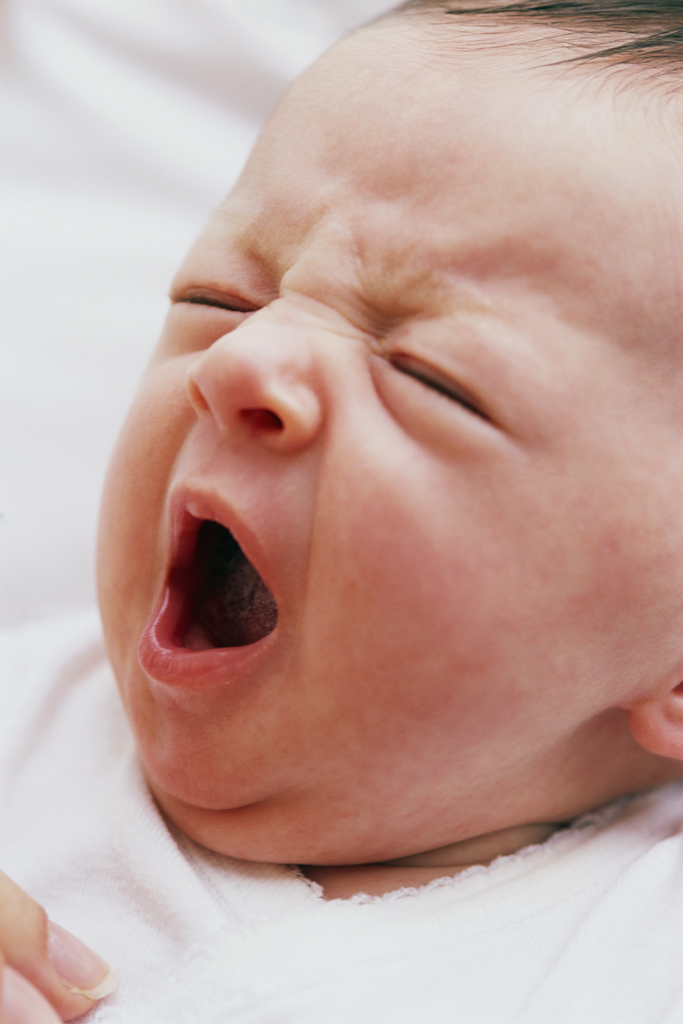
I wholeheartedly agree with Dr. Leach that leaving a young infant to cry is damaging to the brain as well as to the baby’s emotional development, and to the relationship between mother and child in terms of the child trusting that their caregiver will respond to their needs, requests for help. Crying is the young infant’s primary form of communication. They need to trust that you will respond to them when they communicate and that trust is vital to ongoing attempts to forge a bond of attachment. I don’t use this word attachment in a fluffy way; I am talking about the attachment that psychologists study in humans and in animals as being necessary to our very survival.
Perhaps the main reason for the persistence of the CIO method is the misunderstanding that it works. Certainly, many babies do eventually stop crying and sleep, but unfortunately, this is often cited as being linked with the baby becoming so stressed that he or she simply shuts down as a means of coping with extremely overwhelming negative emotions, similar to victims of post traumatic stress disorder. These babies pass out from exhaustion and fear, from crippling levels of stress hormones in their tiny developing brains. They do not go to sleep because they have learned to self-soothe.
Given the new body of sophisticated, cross-discipline research on attachment and brain development outlined in this article, it is clear that a baby’s willingness to accept sleep training after reportedly brief periods of protest is no less than a cycle of hyperarousal and dissociation responses that is damaging to its development. To think that since the infant has passively accepted the new sleep system, the sleep training is thus “successful,” is to misunderstand the workings of the infant brain. No longer can we accept the conventional wisdom that babies are merely “exercising their lungs” when they cry; nor can we tolerate interpretations of babies’ cries as “manipulation.” Babies cry to signal distress and in effort to engage caregivers to help meet their needs and foster their healthy development. It is an attempt at communication, not manipulation. Their goals are survival and optimal development. This is achieved through secure attachment.
The Science of Attachment: The Biological Roots of Love
By Lauren Lindsey Porter
Mothering Issue 119, July/August 2003
There is another common argument in favour of crying-it-out: my parents did it to me and I’m fine. As I was researching this post, I stumbled upon the following reaction to Dr. Leach’s comments to the BBC: Something Else to Worry About: Expert Claims “Cry-it-out Sleep Training” Can Cause Brain Damage. Ms Langmuir, who is not a parent as far as I can tell, is primarily arguing that her own parents let her cry it out and she “does not consider [herself] brain damaged.”
We obviously have differing opinions of “fine.” By using the words “brain damaged,” the author seems to be implying that she doesn’t suffer from permanent cognitive damage or an impaired ability to function in society.
Unfortunately, that is not the kind of damage that Leach is talking about. She is talking about a scenario where babies end up with a new set point in their brains in which elevated levels of stress hormones like cortisol and adrenaline are the babies’ new normal. These babies grow up to have life-long issues with elevated stress-responses. This very thing has been documented in preemies who have very stressful early days including separation from their mothers and painful tests. All of this happens while a baby’s brain is still developing and it definitely absolutely does shape the architecture of the brain. This baby will grow up thinking it is normal (as the author does), because it IS normal for them.
We live in a culture where stress, anxiety and depression are the norm. Who is to say what the root of that issue is?? I was also left to cry as a baby and I deal with depression and anxiety as an adult…is that because my brain is wired to produce elevated levels of stress hormones?? It could very well be. And I refuse to risk passing that on to my own kids.
—————————————————–
Check out part 2 tomorrow to find out what happened when this young mother disclosed that she had let her baby cry. And in the mean time, what methods have you used to help your babies sleep and if you allowed some controlled crying, did it work and when did you start?
3 Comments
Trackbacks/Pingbacks
- Tweets that mention Not For Us – Cry It Out Pt. 1 | bluebirdmama.com -- Topsy.com - [...] This post was mentioned on Twitter by Childbearing Canada. Childbearing Canada said: Sharing: Not For Us - Cry It…


I have never done cry-it-out. I have held a crying baby, after all attempts at soothing have failed. My first child cried a LOT during her early weeks, for instance. But I believe that there is a big difference between leaving a child alone to cry, and doing your best to soothe a child but being unable to. Those episodes of crying were traumatic enough for my husband and me that I can’t see leaving my child to cry.
That’s just my personal comfort level, and I know others may have different comfort levels. I just know that, for me, this is the best choice.
.-= Amber´s last blog ..Balloon-y Baby Blanket =-.
Twitter: AmberStrocel
I don’t like cry-it-out, It feels so wrong. I still remember when my first was a week old, he started crying in the backseat and had to wait a few minutes til we could get to place to pull over. The absolute pain in my chest from that, I can’t do it.
I agree with everything you said. Babies do not understand concepts the same way adults do. Or even the same way older children do. I can step out of the room and my toddler understand that I am still there, an infant has no clue. You’ve suddenly stopped existing! That has to be stressful in deep, lasting ways.
.-= Summer´s last blog ..Why Doctors Piss Me Off =-.
I absolutely do not agree in doing any form of CIO on a baby younger than 6 months of age. My oldest child cried a lot when he was teeny and I just held him or rocked him for hours in the night. It was very tiring but we survived it.
At 6 months of age I tried the Baby Whisperer technique of Shushing and Patting and Pick Up/Put Down. I tried that for a few months until I was about to lose my mind and at 8-9 months of age I introduced controlled crying. I popped into see him every 5 min until he fell asleep. It took a few days but it worked.
He stopped crying and started babbling at bedtime after 4 days or so. I continued to pop into see him every 5 minutes or so until he fell asleep.
He is 3.5 now and still not a great sleeper. He still talks to himself to go to sleep and I still check on him every so often until he falls asleep. I think it’s just his natural way of falling asleep.
I found the controlled crying helped most with the night-wakings when he was a baby. He would only cry in the night if he needed to be fed instead of all night long.
.-= Marilyn (A Lot of Loves)´s last blog ..Making a Bad Deal =-.
Twitter: MBels