


Featured
Balancing Needs When Baby Trumps Mama

Welcome to the April Carnival of Natural Parenting: Parenting advice! This post was written for inclusion in the monthly Carnival of Natural Parenting hosted by Hobo Mama and Code Name: Mama. This month we’re writing letters to ask our readers for help with a current parenting issue. Please read to the end to find a list of links to the other carnival participants. *** Strive for Balance in Personal and Family Life It is easier to be emotionally responsive when you feel in balance. Create a support network, set realistic goals, put people before things, and don’t be afraid to say “no”. Recognize individual needs within the family and meet them to the greatest extent possible without compromising your physical and emotional health. Be creative, have fun with parenting, and take time to care for yourself. ~ 8th Principle of Attachment Parenting, Attachment Parenting International. Sometimes I think this oft-overlooked 8th principle is the most important principle of the Attachment Parenting philosophy. Sometimes I think that it’s the part that makes all the other principles possible. However, for me, it is also the hardest principle to implement. And I don’t think I’m alone. It seems that striving for balance and finding time for self-care are on the minds of most parents in some shape or form. There are a lot of sites out there rife with advice on how to do this. Jen Louden of Comfort Queen talks about renewal, comfort and making time for yourself, with coaching geared specifically for women. Sarah Juliusson from Mama Renew gives tips and offers workshops for mothers. Renee Trudeau wrote a book called The Mother’s Guide to Self-Renewal. Advice varies from lighting candles to attending week long child-free retreats. There should be something there for everyone. And in many ways, there is. However, dear reader, what does one do when trying to honour our own needs pits us against our children? I recently read Raising Your Spirited Child: A Guide for Parents Whose Child Is More Intense, Sensitive, Perceptive, by Mary Kurcinka. The book outlines the different ways that a child can be spirited and has scales for rating your child on the various aspects. There is also a section where you rate yourself. I was reading the book because I suspected that my powerhouse of a four year old was spirited and he did come out mildly spirited based on our appraisals. What surprised me was that in some ways I am spirited as well (I think Kurcinka would term me spunky). And here’s the kicker: Rain and I are spirited in opposite ways (for the most part). He rated low on the things that I scored highly on and I rated low on the things he scored highly on. An example would be that Rain is fairly exuberant (for those familiar with Kurcinka’s book, you will recognize my attempt to use a positive label) and I am sensitive. Rain rates highly for energy; he is always wiggling, always on the move, always making noise. He can’t talk; he yells. He loves to bang on drums. I scored low on energy. I have always been quiet. As I child I preferred to read, colour or draw rather than join in on a team sport for instance. It drives me crazy that my husband shakes his leg or drums his fingers when relaxing on the couch. I tend to be still. I rate high however, on sensitivity. I am a far pickier eater than anyone in my family, I am always cold and I find noise extremely stressful. I am often reminded during the course of my day that excessive noise is used as a method of torture and as a means to end hostage situations. I have also been known to joke that having kids is like having a bowling alley installed in your brain. When our house gets especially noisy, I feel myself tensing up and my reactions to otherwise innocuous behaviour become harsh and grouchy. I react like someone being attacked. I counter-strike. I understand that kids have lots...
Read MoreLeaping

The summer of 2002 everyone must have thought I went crazy. I started dating a friend (who was also the ex-boyfriend of a long-time friend of mine) and by the end of the summer, we announced that we were getting married in September. When I called my parents to tell them I was getting married they didn’t even know I was seeing anyone. That was only half of it. We also bought a 1984 Bluebird schoolbus and told everyone that we were going to convert it and live in it, in the middle of Vancouver. We owned it for a year and were slowly trying to do the conversion on the weekends and not making much progress. We thought if we moved into it, our progress would be quicker. My older sister and her family were moving to Vancouver around that time and we came up with the idea to try to find a house for them to rent where we could park the bus in their backyard. We thought we would subsidize their rent for two years before looking for somewhere else. We started keeping our eyes open for good potential houses. As we went about our business in the city, there was one house that we always noticed had the perfect space. It was on a corner, backing on to a huge green park with a lake complete with swimming beach and where the farmer’s market is held on Saturdays. On Sunday nights, there is firespinning in the park and every summer there is a lantern festival that attracts 10,000 people. The park is in the middle of metro Vancouver in a vibrant diverse multi-cultural neighbourhood. The yard was perfect and had just the right space for a 40′ long bus. My brother-in-law came to Vancouver to house hunt for his family and one evening, after dinner, we drove by the house just to give him an idea of the kind of sweet space we were dreaming of. A few days later, Stewart came back from his search with the classifieds and grinned “You’ll never guess what house I just looked at!” We couldn’t believe our luck that the house was actually for rent! We went to the open house with the landlord and there were a lot of other contenders. The rental market in Vancouver has been tight for a few years now and the house was reasonably priced. We thought it best to be upfront about our plans to park a 40′ bus on the property rather than ending up with a mad landlord on our hands later. We were very worried that the landlord would never want to rent to us with our crazy idea to park a bus there. The weekend passed slowly with much hand-wringing and driving by the corner wistfully staring. At the end of the weekend, the landlord called to let us know that he had decided to take a chance on us and it was ours. We called it the Destiny House. We stayed for 5 years. We got to know all of our neighbours. We built a parking pad for the bus, redid the whole yard including putting in a 40′ long veggie garden beside the bus. I developed a close relationship with my sister who I’d never been close to as she is seven years older than I am. Both of my kids were born there and all of our children grew up more like siblings than cousins. We became fixtures in the neighbourhood and we learned the meaning of the word community. What started as a bunch of crazy spontaneous ideas in 2002 became the most magical experience. I could never have imagined such a perfect vision of this dream made into reality. I wanted to live in the bus in the city and by taking a leap of faith, it came out way better than I even envisioned it. We’ve moved on now but we’ve been having a lot of discussions with my sister and we now share the mondo beyondo dream of creating a...
Read MoreWondering About Waldorf
This is Part VIII of the series Kindergarten Considerations in which I have been discussing (and wrestling with) the considerations behind the seemingly innocuous decision of where to send my four year old son to school. The next two posts are dedicated to a discussion of our top options. We already looked at Montessori education. Today we’re talking about Waldorf schools. I have only known about Waldorf schools for a few years. The concept gradually seeped into my consciousness and I can’t remember what I first heard about it or from whom. We were living in Vancouver. Aaron came home from work one day and told me that a client had been explaining Waldorf to him and that it sounded really interesting. I had heard of the school before then but that was the most I knew of it for a long time. From there, I learned little bits here and everywhere. I’ve learned the most about Waldorf education in the last four months. Before then it was just this nebulous alternative school. There is a new initiative in our area to start a Waldorf school. There have been previous attempts over the years that have petered out. This particular initiative looks poised to happen. The intent is to open the doors in Sept 2010 with Kindergarten and grade 1, and to add a grade each year. There may be as few as 10 kids enrolled in the first year. I have mixed feelings about this but I will come back to that. First, some background on Waldorf schools for those of you who know little about it. Sometimes called Steiner Schools, the concept for the school is based on the thoughts of Rudolf Steiner. Steiner was a philosopher who was asked to develop the curriculum for children of the Waldorf-Astoria cigarette factory workers in Stuttgart and this is where Waldorf schools come from. In a nutshell, the Waldorf philosophy believes that the child should be approached on their own level which in the early years is primarily through play and imagination. Especially in the early years, the belief is that children learn best through imitation so the teacher plays the role of guide and model. There is a lot of emphasis on the natural world, on yearly celebrations, on community. Children write and draw to create their own textbooks. Many of the learning concepts are taught through the use of stories and over the years, children cover folk & fairy tales, fables, Greek myths, and more. In addition to regular academic studies, Waldorf schools also teach art, hand crafts (like knitting), gardening, music (every child learns to play an instrument), foreign language, a kind of dance/creative movement called Eurythmy. They have outdoor play time and also circle time with stories and songs. Contrary to the Montessori method which is very individually driven, Waldorf schools structure the day around often coming together as a group. You can learn more about the philosophy here or here. Waldorf schools, like Montessori schools, vary greatly in their implementation because they are run independently. It’s not like a franchise restaurant where your burger will be the same in Medicine Hat as in Chicago. As such, I’m sure there are good schools and not so good. One of the criticisms I have heard of various Waldorf schools is that they can seem rather cultish. I am not sure if that is a reference to the emphasis on natural rhythms which might feel too close to paganism for some families’ comfort or if it is due to a perception of over-adherence to the teachings of a single individual. The focus on the fairy stories, arts and natural world rhythms strikes some families as being too out there, hippie, airy-fairy or pagan. I’m not overly worried about any of those but I certainly see how some mainstream, conservative families may feel that they wouldn’t fit in the larger community of the school even if they are interested in the education for their children. At the risk of totally putting my foot in my mouth, my impression...
Read MoreWe’ve got tantrums

Rain was never really one to have tantrums. Noa, on the other hand, tantrums about nearly everything. She is sweet, good-natured, generally quiet, bashful in public. No one believes us when we say that she can seriously flip out when she doesn’t get what she wants, like: If I don’t nurse her when she wants to If Aaron puts her down/doesn’t carry her everywhere If we move the chair (that she dragged over) away from the stove so she can’t help stir burn herself If Rain tries to hug her If we try to change her diaper She says “Hey You!” to us (and Rain) if we do anything she doesn’t like and depending on how upset she is it varies between a plaintiff murmur and scowl to screaming and crying “Heyyyyyyy Youuuuuuuuuuuuuuuuu!” Sometimes if she’s really upset, she’ll walk into the kitchen and lean on the fridge with her face on her hands and cry as if to say “no one understands; the only support I have is this fridge”. Not that I leave her to cry on the fridge…I am a huge supporter of the idea that toddlers tantrum because they haven’t yet learned how to deal with overwhelming emotions and that they need compassion and help in those moments. Nevertheless these tantrums are often hilarious. I’m seeing Noa’s tantrums increase as she gets frustrated with her inability to communicate with us. At this age Rain could talk very well. Noa still sounds like the Swedish Chef to me most of the time. Yesterday, I found her pulling out the recycling in the pantry so I took her out and shut the door. She had a total melt down because (as it turned out) she was trying to climb the shelves to get the crackers. I gave her a cracker and all was well. I wish she could just say cracker. On a related note, Rain has started having larger outbursts than he used to. This started after Noa was born and we moved. Both changes were very difficult for him. The other day, he threw a tantrum and he flopped backwards on to the floor right into a puddle of pee that I had been distracted from cleaning up because of his tantrum. Divine justice. I totally behaved like Nelson on the Simpsons; I pointed and laughed at him “You just threw yourself in pee!” He started laughing and the tantrum was over. Some of the solutions that we use are: Try to understand – especially in the face of obvious communication gaps with Noa, but miscommunication also happens even with very verbal kids. Lighten the mood – find something to giggle about together without really laughing at the child or the way they are feeling. I keep my snickers over the dramatics private as much as I can but I do try to help the kids lighten up if at all possible. Be compassionate – give a hug, give words to their feelings, be empathetic. Give space – Noa occasionally resists any kind of sympathy and will push away from hugs or other attempts to soothe her. In those moments, though it’s hard for me, I try to respect her need for space. Warn and avoid – of course we all try to avoid tantrums in the first place. So far the best way to do this with Rain has been to give ample warning about what is coming next. He does not adapt well to transitions and change so it is of utmost importance that he always be told how long until we leave, what happens after dinner, who is coming over on Tuesday, etc. etc. This seems to ward off most of our serious meltdowns. Still, we’ve got tantrums – how about you? What do you do to deal with the intense emotions of your...
Read MoreA Culture of Less
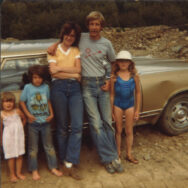
Welcome to the March Carnival of Natural Parenting: Vintage green! This post was written for inclusion in the monthly Carnival of Natural Parenting hosted by Code Name: Mama and Hobo Mama. This month we’re writing about being green — both how green we were when we were young and how green our kids are today. Please read to the end to find a list of links to the other carnival participants. Today is my birthday. Thirty-two years ago my mom started having contractions while she was grocery shopping. She went about her day, took care of my older siblings, visited with my grandmother. After my dad got home from work, grandma left and around supper time, I was born at home. Grandma called to say she’d thought of a name if the baby was a boy and dad informed her, “Too late; It’s a girl!” Grandma came back, made everyone dinner and they had leftover birthday cake from mom’s birthday on the 7th. And so it is that I grew up thinking that homebirth was special, not dangerous. And so it is that twenty-seven years later, I had my first homebirth. In some ways, I think that this is as vintage green as it gets. The oldest thing in the book: having babies the way our bodies were designed to, without a lot of wasted resources and unnecessary technology. There are plenty of instances where the resources and technology are useful, life-saving but increasingly, birth, like our culture as a whole, is characterized by excess and waste, with damaging consequences. Homebirth is only one of the green values I picked up from my parents without even realising until I was older that it was green. My parents moved a lot while I was growing up, from the Yukon to the Canadian prairies to BC, but I think at heart they always think of themselves as Northerners. The term encompasses everyone up north and a Yukoner probably has more in common with an Alaskan than they would with anyone in the rest of Canada. A northerner is a crazy mélange of hippie and redneck: 4x4s and guns mixed with folk music and a back to the land mentality. My dad subscribed to Mother Earth News and the Canadian counterpart, Harrowsmith. They had good friends who lived year round in a Tipi. It was there in the North that they decided to have me at home. At the time, in the 70s and 80s, it was just how we lived. A kind of quiet environmentalism that was born of Depression era great-grandparents, exalted by our Mennonite heritage (world-renowned cheapskates) and idealized by the Northerners and hippies. They were a product of their location but also of their generation. Now, I wouldn’t really classify my parents as environmentalists at all. But when I think back to the green actions of my parents, what comes to mind is this: Before recycling, there was reduce and re-use. My parents reduced and re-used like nobody’s business. We wore hand-me-downs. We never had new furniture; it was always used or antique. We didn’t buy fancy toys. My dad fixed things when they broke: from electronics to the car to the plumbing. My mom had a garden and she canned. My mouth waters when I think of her pickled beets and carrots, her canned pears and peaches. She sewed dresses for my sister and me for special occasions. We were a single car family and we drove used cars. My parents only bought one new vehicle ever: a 1974 International Scout. They still have it. We shared bedrooms. We lived within our means, never on credit. Even when my dad went back to University with three kids in tow. They did not over-consume. They did not throw things away. They reduced. They re-used. Tonight I look around my house and see the same lifestyle. Fifteen year old minivan, used or antique furniture, a house smaller than we might like, a garden. A willingness to build things, grow things, borrow things, make things or do without things rather...
Read MoreMaybe Montessori

This is Part VII of the series Kindergarten Considerations in which I have been discussing (and wrestling with) the considerations behind the seemingly innocuous decision of where to send my four year old son to school. The next three posts are dedicated to a discussion of our top three options. This post looks at Montessori. Amber from Strocel.com recently pointed out that it’s going to be impossible to find a perfect school and I know she is right. I am aware in some deep recess of my brain that I can’t be too picky. I have to be realistic. I think we all choose the best option for us, for our circumstances. The director of Rain’s preschool has also reminded me (rightly) that no matter what school we choose, it’s going to come down to the teacher whether or not it’s a good fit for him. With that said, let me warn you that in the next few posts I will be picking apart all of our options. Which isn’t to say that I won’t choose one of them in the end. I should add my little disclaimer here that my comments about particular schooling philosophies represent my impression based on preliminary research and reflect our own family educational goals. My comments are not intended to suggest that a particular philosophy may not be the right choice for your family. Montessori A couple of weeks ago I mentioned that we were attending an info session for the local publicly run Montessori program. I went to the evening with an open mind and felt excited about checking it out. I only knew the bare minimum about Montessori. I knew that it had been around for about 100 years, that it was started in Italy by Maria Montessori and that it’s generally regarded as a very good alternative schooling program. I also knew that the children are allowed to roam freely around the room and choose materials to work with as they like. So far so good. The first thing they did at the info session was show us this video to introduce us to the basics of Montessori education. The learning materials and environment are intriguing and beautiful. I was encouraged by some aspects of the philosophy: the emphasis on self-directed learning and the addition of non-academic units like practical life. The staff, teachers and our local society seem sincere, dedicated and earnest. But the reality of the program here didn’t mesh with the fairy tale in the above video. The school, a former middle school, was large and imposing. The room on the second floor, though filled with Montessori materials was utilitarian with only two windows at one end of the room, located above a 3 foot counter. I tried to imagine my son trying to see out the windows or walking to his classroom, through wide corridors and up long flights of stairs. It didn’t feel very accessible to a five year old. In and of themselves those issues could be dealt with. It would only take a few weeks for Rain to get used to the immensity of the place. I feel more bothered by the lack of accessible windows really. But I also think back to when I would pick up my niece from Kindergarten. Everything in that whole wing of her school was kid size: tiny toilets, tiny water fountains, coat hooks at knee level, bright windows. Taylour’s kindergarten reminded me of my own and I wonder how is it that school has changed so much in the last 10 years that we no longer try to approach the child on their level? Moving on though. My impression of the space quickly bled into my impression of the philosophy. Keep in mind that I was there in the evening so I wasn’t able to observe children in the classroom, but to me, the program felt cold. Though the video talks about how much fun the children have while they are learning, we also heard repeatedly that the children would not be playing with the materials;...
Read More

Recent Comments
No comments to display