


Simple Living
A Culture of Less
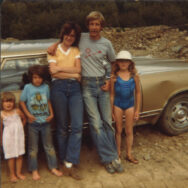
Welcome to the March Carnival of Natural Parenting: Vintage green! This post was written for inclusion in the monthly Carnival of Natural Parenting hosted by Code Name: Mama and Hobo Mama. This month we’re writing about being green — both how green we were when we were young and how green our kids are today. Please read to the end to find a list of links to the other carnival participants. Today is my birthday. Thirty-two years ago my mom started having contractions while she was grocery shopping. She went about her day, took care of my older siblings, visited with my grandmother. After my dad got home from work, grandma left and around supper time, I was born at home. Grandma called to say she’d thought of a name if the baby was a boy and dad informed her, “Too late; It’s a girl!” Grandma came back, made everyone dinner and they had leftover birthday cake from mom’s birthday on the 7th. And so it is that I grew up thinking that homebirth was special, not dangerous. And so it is that twenty-seven years later, I had my first homebirth. In some ways, I think that this is as vintage green as it gets. The oldest thing in the book: having babies the way our bodies were designed to, without a lot of wasted resources and unnecessary technology. There are plenty of instances where the resources and technology are useful, life-saving but increasingly, birth, like our culture as a whole, is characterized by excess and waste, with damaging consequences. Homebirth is only one of the green values I picked up from my parents without even realising until I was older that it was green. My parents moved a lot while I was growing up, from the Yukon to the Canadian prairies to BC, but I think at heart they always think of themselves as Northerners. The term encompasses everyone up north and a Yukoner probably has more in common with an Alaskan than they would with anyone in the rest of Canada. A northerner is a crazy mélange of hippie and redneck: 4x4s and guns mixed with folk music and a back to the land mentality. My dad subscribed to Mother Earth News and the Canadian counterpart, Harrowsmith. They had good friends who lived year round in a Tipi. It was there in the North that they decided to have me at home. At the time, in the 70s and 80s, it was just how we lived. A kind of quiet environmentalism that was born of Depression era great-grandparents, exalted by our Mennonite heritage (world-renowned cheapskates) and idealized by the Northerners and hippies. They were a product of their location but also of their generation. Now, I wouldn’t really classify my parents as environmentalists at all. But when I think back to the green actions of my parents, what comes to mind is this: Before recycling, there was reduce and re-use. My parents reduced and re-used like nobody’s business. We wore hand-me-downs. We never had new furniture; it was always used or antique. We didn’t buy fancy toys. My dad fixed things when they broke: from electronics to the car to the plumbing. My mom had a garden and she canned. My mouth waters when I think of her pickled beets and carrots, her canned pears and peaches. She sewed dresses for my sister and me for special occasions. We were a single car family and we drove used cars. My parents only bought one new vehicle ever: a 1974 International Scout. They still have it. We shared bedrooms. We lived within our means, never on credit. Even when my dad went back to University with three kids in tow. They did not over-consume. They did not throw things away. They reduced. They re-used. Tonight I look around my house and see the same lifestyle. Fifteen year old minivan, used or antique furniture, a house smaller than we might like, a garden. A willingness to build things, grow things, borrow things, make things or do without things rather...
Read MoreTrust

My sister and I have a plan to live together again. When we moved in July 2008, we (Aaron and I) essentially put our son and my sister’s kids through a divorce. They had grown up together, almost like siblings. The adults almost like surrogate parents, not merely aunts and uncle. Then we moved 4 hours away from them. It is still a little heartbreaking when I think of the poor kids that summer. We started making a plan to be together again. The plan is pretty detailed; more than I will get into here, now. I used to call it The Pipe Dream but lately it has become The Potential Pipe Dream in my mind. How pathetic is that? It’s not just a dream, it’s an unrealistic dream? And not even that for sure, just potentially? My sister teases me about this, and I do see the humour in it; but, it’s indicative of my state of mind. I struggle with the feasibility of The Plan in general given our financial situation but also because it feels like The Plan will make some of my other dreams and goals impossible. I’ve begun to question what it is that I really want. What am I willing to sacrifice? Where can I compromise? What is most important to me? I’ve been feeling like I just don’t know. At the beginning of January, I wrote about my hopes for this year. I wrote that I hoped 2010 would be the year where I get clarity, where I would discover my VISION. I also started exploring Mondo Beyondo. I missed out on the registration for the January session but in March I’m planning to tackle the 5 week online course in DREAMING BIG. The website explains that the course is for anyone but the more outrageous the dream the better. I asked myself: “What is my most outrageous dream?” And you know what? I know the answer. I know exactly what I want to be doing in fifteen years. This was no general statement like “I want to retire” (which isn’t my dream, by the way). I know in explicit detail what my most outrageous dream is. Without a doubt. Thinking back to Christine Kane’s Word of the Year tool, I realised that maybe VISION isn’t really the word for this year. It’s not vision that I am lacking. It’s FAITH. The reason I am waffling on The Plan is because the part of me that is scared and doubtful doesn’t believe we can do it. Here we are: three weeks into the New Year and I’m already re-evaluating my Intentions. Sheesh. So then. This might be the year called Believe. The year called Trust. The year called Faith. I still don’t know how to make The Plan a reality. Breaking it all down into manageable, bite-size, achievable goals is going to take some time. But I do know the first step is to stop calling it The Potential Pipe Dream. The second step is to Trust. This post was written to participate in the Crafting My Life series at...
Read MoreOn Meadowview Street
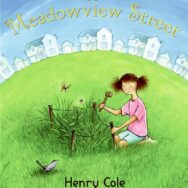
I’m usually the one who takes Rain to the library but one week I sent Aaron. He came back with this treasure of a book. On Meadowview Street is the story of a girl who moves to a house in the suburbs and decides with her parents to sell the lawn mower, let the grass grow long and turn their yard into a nature preserve. They plant some trees and build some ponds. One of the latter pages in the book also has lovely drawings of the type of natural plants and creatures she might find in her yard after the makeover. And her idea starts to spread down the street. I love it that Caroline gets her parents on board. Too often, the reality in this story is that the parents would put an end to her nature preserve. This is a story about respecting the earth and about going outside the norm, not being afraid to be different. It’s a story about how one person following her heart can start a trend. I am not a fan of lawns, especially those square lawns in subdivisions and in front of patio homes where all the houses look the same, and the only embellishment to the yard are a few low maintenance shrubs and some tiny poorly pruned city trees. I love this book for inspiring children to think about the changes that could be made to return their lawns to a natural state. I love this book for daring to say that an un-mown lawn in its natural state is more beautiful than a manicured city lot. I love it for suggesting that living in the city doesn’t have to mean you can’t commune with nature. Imagine if the book went a step further and suggested only planting local native species? I’m even dreaming about a second book where the front yard is turned into an edible garden, where Caroline grows lettuce, tomatoes, beans, peas, herbs. Imagine if everyone really did this? There is an organization that is trying to encourage people to do just that. You can check out the book Food Not Lawns and also find them on the internet. There may even be a chapter near you. These are local grass-roots organizers who encourage people in their communities to convert their yards into gardens and grow their own food. They organize seed exchanges and put on workshops for people who want to learn how to garden but don’t know how to start. Until then, you can read this book with your children and inspire them to think differently about what they can do about their own environment and about the food they eat. Book Description: Caroline lives on Meadowview Street. But where’s the meadow? Where’s the view? There’s nothing growing in her front yard except grass. Then she spots a flower and a butterfly and a bird and Caroline realizes that with her help, maybe Meadowview Street can have a meadow after all. On Meadowview Street Henry Cole Harper...
Read MoreJust Renting

Bear with me for a moment while I do something taboo and talk about finances – you know, how much money we make (or don’t make). My husband and I are the last people we know who are still renting. Seriously. I don’t just mean the last in our group of friends. I mean all of our friends and acquaintances and the new people we meet all seem to own a house, a townhouse, a condo, something. It’s like we’re the last people in our demographic who are still renting. Although, what demographic do we really fit in anyway? If it’s age, that’s easy. But income? Class? That’s a little trickier. I have started to notice the subtle ways we apologize for things we think society finds objectionable, like renting. When we moved to our small town in 2008, everyone assumed we were escaping the Big City real estate prices and were surely buying a place. When we moved from our 1 year lease last summer into our current house, everyone assumed we’d bought our cute too small war time bungalow. Our answer is always this kind of bashful “No, we’re just renting.” Sure, some of it is by choice, but really, honestly, truthfully, we can’t afford to buy. It’s hard not to feel apologetic when you’re revealing a semi-embarrassing class barrier. Especially when all of your friends are on the other side of it. The people our age who own a house, have done so because: 1) they are professionals 2) their parents have helped them out SIGNIFICANTLY 3) they were the recipients of an inheritance We are not professionals. I am a stay-at-home mom and former administrator. When I went on maternity leave, I had been working my way up at the company I worked and was getting to the place where my salary was not too shabby. But I’d be back at the bottom if I returned to work now, after all the time off. My husband is in the trades. The non-unionized trades. So no big bucks there. Most of our married life we were paying off my student loans for my General BA in the humanities – you know, the degree that gets you tons of high paying job offers? There was no chance to pull together a down payment for anything. Our parents will not be helping us out. Our parents are working class. My in-laws are farmers in Saskatchewan. My parents are former Nazarene ministers who lost a house in the early 80’s. (Oh, yeah and those student loans I was paying off? Also because I wasn’t getting help from my parents. I’m ok with that. I do think it builds character. But it definitely changes things when you leave school with massive loans. That’s a totally different blog post though.) Our extended families are also working class. There will be no surprise inheritance from a great-aunt or aged grandparent. Even if there was, we’d be splitting it 36 ways with cousins. And for the few friends I have that were able to buy a place because they’ve already lost a parent? I can’t think of anyone who envies them their houses…they came at a price far far greater than any mortgage. I stay home with our kids – with two, I’d have to earn a lot to cover the childcare anyway. Aaron just started his own business so the banks won’t be looking at us seriously for a few years. For some reason, I feel apologetic about that. Every time someone asks me if we own our house, I forget the choices we made and I toss in that little just, “just renting”. So after all this whining about class and income, why am I saying choices? Because there was a time, before we had kids, when we lived in the Big City and were both working when we probably could have bought a place. But we consistently made choices not to buy real estate. Aaron’s parents did give us a bit of money. At the time, it would actually have...
Read MorePaperless Christmas

This is the second year in a row that we opted not to buy any paper wrapping for Christmas. Last year we started using cloth for all of our wrapping. We store it in a bin and plan to re-use it every year. We do run into some issues with gifts given outside the family because I have a hard time giving away the cloth and not getting it back. This is primarily an issue of finances at the moment because we don’t have the funds to replace it. Plus, I would like to know that the recipients would use it again and not toss it or else it defeats the purpose. For now, we’ve been using up the last scraps of paper and gift bags from other years on friends. But we are finally out so next year will truly be 100% paperless for us. Ribbon We save ribbon whenever we get gifts and toss it in the bin so we have quite a stash now. I’ve noticed that many people use cloth ribbon even on paper wrapped gifts and I never ever let it go to waste. I also picked up a few rolls of ribbon on sale at the dollar store after Christmas last year. The rolls were deceptively sparse (very big cardboard tube inside) but there was still a perfect size piece for 1 wrap job. Cloth I went to the fabric store early in December last year and bought fat quarters from the quilting section. There were lots of Christmas prints to choose from and the cloth was already cut into usable pieces. This was a little pricey but I’m sure you could find good deals if you were to visit the quilting section now as they would be selling off the Christmas stock. My husband saw some Christmas dish towels at a dollar store on sale a few days before Christmas last year and picked those up. They work perfect and it’s nice to have some pieces that are bigger than the fat quarters. They are a little stiff but they do work well with the ribbon. Next year I plan to pick up some fabric by the yard for bigger items and also to sew into draw string bags of various sizes. Even my mother-in-law has gotten in the spirit. Last year she bought each of the kids a new beach towel and used that to wrap their gifts. This year, they each got a new blanket as wrapping and we got a new table cloth around our gift. There are lots of ways to be creative and get rid of paper wrapping. Technique You can tie the cloth in various ways according to Furoshiki. Here is a good how-to page with pictures showing techniques for various sizes and types of objects. It’s fun and doesn’t require any ribbon. You’ll need soft cloth though that is pliable and easy to manipulate. The fat quarters work well for this as they were thin cotton. Otherwise, wrap as you normally would and use ribbon to tie in place. You might need another person to hold the cloth for you while you get it tied but that doesn’t happen too often. It’s also pretty easy to adjust the fabric and tuck in stray bits once the ribbon is tied. The biggest issue I ran into this year was not having pieces small enough for stocking items. I think the drawstring bags would work well for this or we could choose not to wrap stocking items. Overall, paperless Christmas was another big success this year! I love the look, it’s easier for the kids to unwrap gifts, there is less garbage to clean up and dispose of and it’s a lot more fun and creative than buying paper from the...
Read MoreChoosing Less

This year we made the decision to stay home for the holidays. Having moved last year and now living away from our families, this meant it was our first Christmas just the four of us. No grandparents. No cousins. No aunts or uncles. Just us. In our own house. Though finances did have a big part in that decision, there was definitely some choice. The choice to forgo the big family Christmas was made because it would be easier on all of us. We gave up the time with our parents and siblings so that we could sleep in our own beds, get our own Christmas tree (for the first time!), eat on our schedule and spend time with our kids (rather than chase them down as they run around with cousins). Though some of this was selfish (because I wanted things to be more stress-free), it was also about doing what was best for the kids. Travel is hard on little ones who thrive on routine, who sleep better in familiar surroundings with a predictable bed time. Visiting family often means missed naps, late dinners, late nights. The result is that the holiday is often exhausting for everyone in the end. So we chose to let go of some traditions and stay home. I’ve been reading Raising Your Spirited Child: A Guide for Parents whose Child is More Intense, Sensitive, Perceptive, Persistent, Energetic by Mary Sheedy Kurcinka. In her chapter on Holidays and Vacations, she says Unfortunately, we are often drained by baking, shopping, entertaining, cleaning, driving or other activities. When our kids need us the most we’re not available. Sometimes in order to bring joy to the holidays and vacations we have to let go. Traditions are supposed to be fun—an opportunity to come together as a family and celebrate. We collect them as we go along, gathering some from the family we grew up in, from our spouse’s family, and from friends. The result can be an overload of traditions. Too many should that lose their joy. We were on the right track when we chose to stay home this year and focus on the needs of our young children. Being home, however, meant that I could try to do more myself. Homemade Advent Calendar, special meals for Christmas Eve and Christmas Day, homemade gifts to finish on deadline, potlucks to attend, dresses to sew. Considering I am still waking with a nursing toddler 3-4 times per night, I don’t have the luxury of staying up to squeeze everything in during the late night hours. Out of necessity, I started dropping things off the to-do list. I chose to do less. I gave up the tradition of pumpkin pie since making pastry was just too much work when only two of us would even eat the pie. We had crème brulée instead. It was easy to make and it was divine. I sewed one dress as a gift but didn’t get to the one for my daughter to wear for Christmas. We had a pj day instead. I got the blanket I was knitting sewn together but I left the trim for after Christmas. The passage from Raising Your Spirited Child really resonated with me today because it reminded me that letting go is best not just for ourselves. It also helps us be more present with our kids. If we are less stressed and haggared by the flurry of holiday shoulds, we feel better, we have more fun and there is more of us still functioning to help our kids through. Holidays are exciting and even at home in our familiar surroundings, it gets a little out of whack for little ones. School’s out, treats are in, routines get loosened. At such a busy time our kids need us more. Sometimes it feels like the long list of things to do is for the kids, that we are making the holidays special for them. But if we were to ask our kids we might find that they’d rather have less traditions and more time with...
Read More

Recent Comments
No comments to display