


Posts Tagged "childbirth"
Water During Labour & Birth
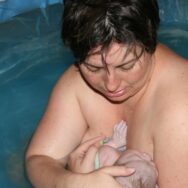
Options for labour and birth have expanded over recent years. You can choose between different health care providers and different birth places. You can choose an active birth, a Leboyer birth and now you can choose a waterbirth. The use of water has become increasingly popular as a way of avoiding a high tech birth both in hospital and at home. While the use of water during labour is common place, giving birth to a baby under water is more controversial. A woman can use water during labour and birth in a number of ways. These include: A shower Hot towels Submerging in a bath Submerging into a deep pool of water Some women feel very comfortable in the water during labour and decide to stay in the water to give birth. Giving birth under water raises many questions – How safe is it? Does research support waterbirth? Does water provide effective pain relief? What precautions should be used if a woman labours and/or gives birth in water? Water, as with many issues during pregnancy and birth, is not very well researched. There needs to be a lot more research before we can accurately answer these and other questions. Some evidence however, is slowly gathering from around the world on the use of water during labour and birth. In the future we will know a lot more. Waterbirth concerns many people. One common fear is that the baby will drown if born into water. The baby born into water has a diving reflex that helps prevents the inhalation of water into its lungs. Once the baby is exposed to air the receptors in the baby’s face trigger the baby’s breathing. Because of these factors, once the baby is born into water it should be brought gently to the surface and the baby’s face must not be resubmerged under the water. To make sure that the baby does not get cold after the birth – the baby’s body can stay under the water and the baby’s head can be dried with a warm towel. If the baby is well he/she can stay with the mother in the water. Whether or not to permit the placenta to be born in the water is another controversial issue. There are some theoretical risks to remaining in the water, however none have ever been proven. Some health care practitioner encourage women to leave the water for the third stage of labour while others are happy for women to remain in the water. If bleeding after the birth seems excessive the woman would be asked to leave the water. I have heard that using water during labour is helpful, can you explain the reasons why? Using water during labour and birth encourages: Reduction in pain Greater mobility that comes with buoyancy Induces relaxation Reduction in abdominal pressure Softening effect on the perineum and vulva can promote stretching during crowing Gentle entrance into the world for the baby One of the most common finding of research is that many women find that being submerged in water enables them to relax and they find the pain of labour lessens. In one study, where women used water during labour only, they found that 80% of the women reported that they would like to use water next time they were in labour. I like the idea of using water during my labour. I would like to know if it is safe for my baby to be born underwater? Until more research is completed, we cannot say with any accuracy whether there are any risks associated with the use of water during labour and birth. The limited evidence that is available so far indicates that waterbirth is thought to be safe so long as some simple, sensible guidelines are followed. These guidelines include: A skilled practitioner in waterbirth is available The pool or bath has been thoroughly cleaned and rinsed A normal labour and birth is expected. The use of water is not appropriate if a woman has a fever, there is meconium in the waters, the baby’s heart rate...
Read MorePostpartum Care – What to Expect
Though pregnancy changes your body in many ways, sometimes the most dramatic changes happen after delivery, during the postpartum period. Here’s what to expect. Painful perineum Your sensitive perineum has been stretched to the limit and it may possibly have been bruised or torn. If it has been cut into, it’s bound to smart. Ask the nurse to instruct you on “peri-care”. Heat increases blood flow and promotes healing; cold numbs pain and decreases swelling. Both measures are necessary to heal a traumatized perineum. The nurse will tuck an ice pack up against your perineum as soon as possible (it will feel so good). She will advise you about soaking in a warm sitz bath (or the tub) and show you how to squirt warm or cool water over your perineum, using a peribottle. Soothe the wound. Spray menstrual pads with either water, witch hazel mixed with water, or perineal wash, squeeze out the excess and put them in the freezer—the cool temperature will feel amazing to your tender perineum. Change and replace as needed. Prevent pain and stretching during bowel movements. Hold a clean pad firmly against the wound and press upward while you bear down. This will help relieve pressure on the wound. Sit down carefully. To keep your bottom from stretching, squeeze your buttocks together as you sit down. If sitting is uncomfortable, use a doughnut-shaped pillow to ease the pressure. Do your Kegels. These exercises help tone your pelvic floor muscles. Simply tighten your pelvic muscles as if you’re stopping your stream of urine. Starting about a day after delivery, try it for five seconds at a time, four or five times in a row. Repeat throughout the day. Look for signs of infection. If the pain intensifies or the wound becomes hot, swollen and painful or produces a pus-like discharge, contact your health care provider. Vaginal discharge You’ll have a vaginal discharge called lochia for up to eight weeks after delivery. Expect a bright red, heavy flow of blood for the first few days. If you’ve been sitting or lying down, you may notice a small gush when you get up. Don’t be alarmed if you occasionally pass blood clots. The discharge will gradually taper off, changing from pink or brown to yellow or white. To reduce the risk of infection, use sanitary napkins rather than tampons. Contact your health care provider if: You soak a sanitary pad every hour for more than two hours You feel dizzy The discharge has a foul odor Your abdomen feels tender You pass clots larger than a golf ball You have a temperature of 100.3 F or higher Contractions During the first few days after delivery, you may feel contractions sometimes called afterpains. These contractions help prevent excessive bleeding by compressing the blood vessels in the uterus. Afterpains tend to occur when you’re breast-feeding and seem to be more noticeable with second or third babies. Medications used to control hemorrhaging after delivery can increase afterpains as well. Usually these pains resemble menstrual cramps. If necessary, your health care provider may prescribe pain medication. Many medicines are safe even if you’re breast-feeding. Contact your health care provider if you have a fever or if your abdomen is tender to the touch. These signs and symptoms could indicate a uterine infection. Difficulty urinating Swelling or bruising of the tissues surrounding the bladder and urethra may lead to difficulty urinating. Fearing the sting of urine on the tender perineal area may have the same effect. To encourage urination, contract and release your pelvic muscles. It may help to place hot or cold packs on your perineum, straddle the toilet like a saddle or use a peribottle to pour water across your perineum while you urinate. Difficulty urinating usually resolves on its own. Contact your health care provider if it hurts to urinate or if you have an unusually frequent urge to urinate. These may be symptoms of a urinary tract infection. Leaking urine Pregnancy and birth stretch the connective tissue at the base of the bladder and may cause nerve...
Read MoreBirth Choices – what is right for you?
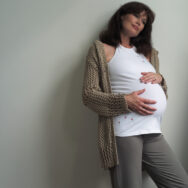
Today we have more choices than ever about how we birth. We have the choice of using a doctor or midwife for our practitioner. We have the choice of birthing in the hospital or at home. We can choose who is present at the birth. We can choose to hire a doula. We can choose between a multitude of prenatal classes ranging from hospital-run classes to private classes in Lamaze, the Bradley method or Birthing From Within. We can enroll our older children in Sibling Preparation classes, we can take prenatal yoga or prenatal pilates, we can bring music, pillows and massage oil to the hospital. We can choose to labour in the tub or the shower or on a birth ball. We can play cards or go for a walk. We can birth squatting or standing or via elective cesarean. We can even write up elaborate detailed lists of all of our preferences and give this Birth Plan to our practitioners. Faced with all of these choices, how do you know what is right for you? How do you know that the choices you made before the big day will still be right when labour starts – especially if you are a first time mom? Choice, in general, can be a double-edged sword. On the one hand, it is empowering and enriching to be given the opportunity to have a say in what happens to us. On the other, given too many choices or inadequate information to help in our decisions, the process of choosing can cause stress, anxiety and even guilt and depression. And when it comes to birth, it can give the misguided impression of control. Relinquish Control (even those subconscious thoughts…) The first thing you can do on your journey towards the right birth for you is to forget about those fantasies of your ideal birth. We all do it: we all have a vision in our heads of the way we hope our birth will proceed. These visions are rarely realistic (unless you imagined in your ideal birth that you would be half-naked on your hands and knees in a roomful of strangers). Birth is a dynamic process and we cannot control what happens. The woman who is determined to get her epidural before she’s finished with the hospital admitting desk may deliver baby at home in the bathroom attended by her partner. The woman who preaches natural birth from before conception may end up with a complication, or labour induction and a cesarean delivery. We’ve all read these stories and hoped it wouldn’t be us. But it could be. So the first step is to let go. Read everything you can get your hands on Knowledge is power. If you aren’t a reader, ask questions. Ask all the mothers you know what their experience was like. Ask your practioner all those nagging questions you’re afraid to speak out loud. Explore all the birth possibilities there are. Don’t shy away from those topics that you hope you won’t have to face (like having a long, drawn out back-labour or requiring a cesarean). Don’t write off ideas that are new to you (like homebirth, or hiring a doula). The more you can understand about the way labour progresses (or sometimes doesn’t) and the way labour is managed (or sometimes mis-managed), the better the chance that you will be able to play an active part in the process. Be Flexible (but know your limits) That is, be prepared to change your mind. Something that seemed right before birth may no longer be fitting during birth. Hell, something you asked for during one contraction, may not be what you want during the next. Accept the fact that you may need to revise your thinking in the face of new information. However, if at any time, you are uncomfortable with the care you are receiving, be confident that it is okay to assert yourself or have some intervene on your behalf. By trusting your instincts and your birth team, you’ll know when to stand your ground and when...
Read MoreVoices: What Story is Your Birth Story Really Telling?

I recently had the opportunity to share the story of my son’s birth with a university class on Child Development during Infancy (conception-3 years). The students are in their early twenties and many had never seen a birth before nor had any prior exposure to the basics of childbirth. As I wrote out my story, I became increasingly aware that I couldn’t just tell it the way I remembered it. I had to bear in mind that the students would be forming impressions about childbirth from my words. I had an opportunity to cut through the noise of birth as pain and talk about what else it can be, beyond just a physical experience. I realized that to be taken seriously I would need to acknowledge that birth IS painful but I also decided to focus on the experience itself: preparations, perceptions, emotions. I spoke about why I chose to have a homebirth in a rational way so that my words would not be brushed aside as those of someone “brave” or “radical.” I had to make very calculated decisions about what to say and what not to say and I got to thinking about the stories our birth stories really tell. Is it a story of fear, pain, control, joy, courage, triumph, peace, dignity, sorrow? Do the details we give and the words we use convey what we intend? Are we aware of our audience when we casually explain about the day we gave birth? Do we pay attention to the fact that there might be a young pre-teen girl there who is soaking it up? What do we want listeners to take away from our tales? In a culture where birth is a medical event, we owe it to future families to tell a positive empowering story if we can. Young women today are bombarded with stories on tv and in the media of childbirth as being so painful and dangerous that the only way they will get through it is by putting their trust in the authorities, giving up the power in their bodies and taking the multitude of drugs offered to manage their birth safely. We can help shape future mothers’ perceptions of birth by carefully choosing our words when we talk about ours. Regardless of the circumstances—whether it was a blissed out waterbirth or a cesarean for breech presentation—we are the ones who tell our stories. We can choose to be positive and inspiring or to instill fear and dread. It’s your...
Read MoreIs homebirth safe?

The most recent studies have shown that with healthy pregnancies free of complications, planned home births attended by trained midwives are as safe as hospital births. There are some VERY important distinctions made in the above statement. Studies of home birth look at: Low Risk women Families who have planned ahead of time to have their birth at home and prepared for it. This does NOT include births that happened so fast that paramedics were called or mom delivered at home alone. Home births attended by trained professional midwives. These studies make no claim as to the safety of unassisted home birth, precipitous home birth or home birth for women who do not meet the criteria for being low risk. Please note the overall findings of a study on home birth reported in the Canadian Medical Association Journal, including some very important benefits of home birth: “there were fewer interventions during labour, including electronic fetal monitoring, induction of labour, episiotomy and cesarean section; women were more likely to have an intact perineum and fewer maternal infections and were no more likely to have third-degree or fourth-degree tears or postpartum hemorrhage; and there were no significant differences in perinatal mortality, 5-minute Apgar scores and meconium aspiration syndrome, as compared with women intending to deliver in hospital who were assisted by physicians or midwives.” – Régis Blais, Are home births safe? CMAJ 2002;166(3):335-6 There is a wealth of information available on this subject: Check out our articles & research...
Read More

Recent Comments
No comments to display