


Posts Tagged "childbirth"
Recipe for a Gentle Birth
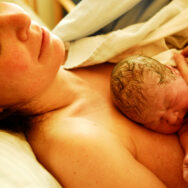
Have you ever wondered what exactly people are talking about when they say “gentle birth”? From the way our culture talks about birth, there doesn’t seem to be much about it that is gentle. This week, I’ve been re-reading Barbara Harper’s Gentle Birth Choices – A Guide to Making Informed Choices and would like to share with you some of her suggestions for a birth that’s gentle on mom and baby. Barbara Harper is a former nurse who went on to form Global Maternal/Child Health Organization and Waterbirth International following the births of her children. She lectures around the world on maternity care reform and describes gentle birth like this: “A gentle birth begins by focusing on the mother’s experience and by bringing together a woman’s emotional dimensions and her physical and spiritual needs. A gentle birth respects the mother’s pivotal role, acknowledging that she knows how to birth her child in her own time and in her own way, trusting her instincts and intuition. In turn, when a mother gives birth gently, she and everyone present acknowledge that the baby is a conscious participant in his or her own birth. The experience empowers the birthing woman, welcomes the newborn child into a peaceful and loving environment, and bonds the family.” I love this description of a gentle birth because on the one hand, it seems so simple and obvious that we should be respectful and gentle with the two main participants in any birth: mother and child. Yet, on the other hand, it highlights for me how rarely this happens in our high-tech culture and how difficult it is for many women to achieve a gentle birth. What are some simple, practical suggestions for a gentle birth? 1. Preparation In the past, preparation would have probably included talking to older experienced women in your community: your mother, grandmother, aunts, older sisters, and probably witnessing a birth or two before you had to do it yourself. Nowadays, some key aspects for preparation are: choosing a childbirth educator that trusts birth and brings a positive attitude to their classes taking care of your body: getting adequate rest, exercising, eating well remaining open-minded and flexible about how your birth might unfold taking an honest hard look at your attitudes, beliefs and fears about birth 2. A Reassuring Environment The human body is designed with some wonderful pain management chemicals called endorphins that are triggered by the contractions of the uterus. The stronger the contractions, the more endorphins are released. Working in direct opposition to endorphins is adrenaline. Adrenaline is triggered by fear and stress. It prepares us for the fight or flight response by tensing our muscles for action. It is the anti-thesis of staying relaxed and letting your endorphins do their job. One key way to help a laboring woman cope with pain is to keep her relaxed and confident. This can prove difficult if she is surrounded by busy attendants, beeping machines, scary looking resuscitation equipment and ticking clocks. 3. Freedom to Move It is vital that a woman be able to move about during labour, to adopt whatever position she needs to birth her baby instinctively. Lying on her back is more painful and unlike more upright positions (kneeling, squatting or leaning on furniture or a support person), she is working against gravity to deliver baby. Moving around during labour helps baby to readjust and descend and keeps mother actively participating in the process. 4. Quiet Keeping the birth room quiet is essential. Partners, support people and birth attendants must respect the mother’s need to focus. Each woman deals with contractions in her own way but it’s absolutely important that she be able to concentrate. Quiet also fosters a sense of intimacy and baby’s transition into a world full of sound is much less jarring. 5. Low Light Turning the lights down or off has much the same effect as turning down the volume. Mother feels calmer and more relaxed. The room becomes comforting and intimate. Baby is more relaxed and alert, able to open his eyes and...
Read MoreRebirth: Maternity Care Alternatives

Planning to have your baby in the hospital? You might have to contend with some of the symptoms of an over-burdened healthcare system. Maternity wards can be over-crowded and under-staffed. Hospital stays are getting shorter. And if you happen to go into labour at the wrong time, you could be sent to another city’s hospital because all of the hospitals nearby are at capacity. What if our maternity care system could be over-hauled to relieve the burden? What are the realities? Fewer doctors and nurses Besides the well-publicized shortage of nurses, Canada also faces a shortage of physicians who attend births. Between 1992 and 2004, the percentage of general practitioners who attended births fell from 28% to only 13%. Rising Costs Having a baby in these technological times is not cheap. The average cost for a vaginal delivery is $2,800. For a caesarean, it is closer to $5,000. This does not include the added costs associated with length of hospital stay or neonatal care. With every epidural, there is an added expense for the anesthesiologist and with a BC cesarean rate approaching 30%, costs are rising for maternity care. Shorter Stays An obvious cost-cutting measure is to shorten hospital stays. The average length of stay for a vaginal birth in BC has fallen to only two days. For a cesarean birth, it is less than four days. Women are being sent home to care for newborns within a couple of days of major abdominal surgery. What happened to resting and recovering from birth? How would a new system look? Midwives Midwives are trained specialists in birth. They have usually completed four years of practical training. Their appointments run about fifty minutes (as opposed to the standard ten minutes with your family doctor). They often do home visits in the first week after baby is born to help initiate breastfeeding and to monitor mom and baby. Mothers report excellent continuity of care and higher levels of satisfaction with their births and their care. The midwifery model of care tends to be cheaper than the current medical model. Midwives believe that birth is a natural physiological process. Though trained to spot and mitigate problems, midwives adopt a fairly hands-off approach as caregivers. Births attended by midwives show a lower incidence of epidural use, episiotomy, and cesarean section. The benefits are not just higher maternal satisfaction, but also much lower costs. Homebirth & Birth Centres In the last two hundred years, medicine has managed to pull birth firmly into its clutches. Contrary to all logic, with birth, we take women who are healthy and place them in the hospital as a preventative measure (in case something goes wrong) and then we treat them the same way we treat the sick and injured. Since when is pregnancy a disease? Modern medicine can be thanked for the low incidence of infant and mother mortality associated with birth today. We know more about the human body, more about birth, more about infection. We know to keep wounds clean. We have antibiotics and other modern drugs. We can save moms and babies from situations that would have claimed their lives only 100 years ago. But that does not necessarily mean that birth belongs in hospital. We can transfer our medical knowledge to other places, like the home. Recent studies show that with healthy pregnancies free of complications, planned homebirths attended by trained midwives are as safe as hospital births. For low risk women, we can achieve safe birth at home and reap a dual benefit because there are advantages to birthing where a mother feels safest and most comfortable. We can also find a middle ground instead of polarizing between hospital and home. Imagine the power of a birth centre: birthing in a homelike setting with a midwife, a birth pool, medical equipment tucked out of sight and the potential of a quick transfer to hospital if need be. On the flip side, imagine the benefits for our rural and northern communities that don’t have hospitals have their own. Mothers would no longer have to travel...
Read MoreShould You Write A Birth Plan?

I was doing some research for a page on Birth Plans (for the business which I founded and have now sold: www.sweethomebirth.com) and was surprised this past week when I went to get a haircut (gasp!) and read Modern times: Don’t be so pushy – Making a “birth plan” is about more than being prepared. It’s about being in control. Here’s why letting go of all that is way harder – and that much better by Katrina Onstad in Chatelaine at the salon. I couldn’t decide how I felt about the piece. On the one hand, here was a mainstream national magazine that was talking about midwifery in a very off-hand way, as if it is becoming the norm and I do agree with the main message which is that “sometimes the best plan is no plan at all.” It’s important to not get too caught up in the whole plan part of the birth plan because, well, we really can’t plan our births. She is right to say that when it comes to birth we have to expect the unexpected and not get overly attached to our vision of the ideal birth. But then again, something rubbed me the wrong way. I mean, it was easy for her to say that the best plan is no plan at all when she had lucked out with an unmedicated natural birth which left her feeling like she “had birthed the universe”. A beautiful way to put it, but not necessarily how other mothers feel when they end up with a horrifying intervention-filled birth. The author suggests that the reason these mothers feel disappointed is because they have too many expectations going into it. Plan or no plan, aren’t these mothers entitled to mourn unnecessary medical interventions? Perhaps Ms. Onstad would be writing a completely different article had she endured a 36 hour labour that ended in a cesarean birth while under general anesthetic. You can bet she’d be researching and making birth plans for her second birth. There is something hypocritical about this romanticization of her own birth when the article’s theme clearly seems to be that “the romanticization of the birth moment is not good for women” (as quoted by cesarean mom Judith). This statement erroneously puts the blame for all these disappointed women on the women themselves, for having plans and expectations. Despite mentioning the rising rates and risks of cesarean birth, Onstad neglects to suppose that labor mis-managment and the cascade of interventions could be the culprits for all the disappointment. Finally, Onstad makes a huge mistake by thinking that creating a birth plan to speak for you regarding your consent to medical procedures equates to an inability to submit to the forces of labour. She says: I was completely and totally out of control, but that moment of submission – totally without any expectation of anything – held the greatest power I’ve ever experienced. Is it not possible to still have that moment of submission while ensuring that your medical rights aren’t violated? What if Onstad’s birth had left her feeling that all her power had been stripped from her, that her body had been violated, or that she couldn’t protect her baby from painful or scary procedures? The difference in these two situations is that in one case the mother submits to the forces of labour, her birth and nature and in the other the mother must submit to the power of the medical system, which unfortunately isn’t omniscient. Having a birth plan is a way of exercising your right to informed consent in your most vulnerable moments, not a way to avoid submitting to the unknowable. I was divided over whether or not to post the article but I couldn’t stop thinking about it, particularly because I loved the dialogue between the article and a blog post I found from one of the commenters. Phd in Parenting wrote a lovely thoughtful (and a little irate) piece in response to the Chatelaine article. She makes an extremely valid point that when you trust your care...
Read More

Recent Comments
No comments to display