


Posts Tagged "Parenting"
Briefly May

What I learned in May 2010: If either of my children intends to pursue dance in the long term I have to be prepared for a ridiculous schedule of rehearsals at recital time. Rain has to be at dance 11 times over the course of two weeks, which involves hauling a squirming toddler inside and trying to corral her while wrestling Rain into dance shoes and ushering him into class in a sea of parents and preschoolers in a room the size of a closet. Run I mean, fun! Making butter from raw cream straight from the farm is not as straightforward as using store bought whipping cream, but tasty nonetheless and Rain loves kneading bread. I love working at the midwifery clinic as office administrator and when I put my mind to it, I CAN write a bio. I love Sir Ken Robinson, love his TED talks and I am currently loving his new book, The Element. I would sew a lot more if I could leave my sewing machine set up permanently. I can get a lot of sewing done while my daughter naps and having all the pieces cut and ready to go ahead of time makes sewing much more enjoyable. The weather in May is much more unpredictable than I would have predicted. Hello summer? Where are you? The steps to being awesome are easy to come up with but following them is not. Burt’s Bees avocado butter pre-shampoo hair treatment makes my hair happy. Rain is a comedian, an artist and has a flair for showmanship: Rain came out of the bathroom calling “Mom, you have to come see the treat I made you!!” I replied, “Promise me it’s not poop.” He said, “I promise.” As I entered the bathroom, he pulled a towel off the towel bar with much fanfare to reveal his masterpiece: a drawing of himself picking his nose! I can assure you that I was NOT able to keep a straight face as I explained that we do not write on the walls of our rental...
Read MoreStop The Cycle – Cry It Out pt. 2

Last week at my local La Leche League meeting the topic for discussion was adapting to motherhood and one of the questions was “What did you to do to help your baby adjust to life outside the womb?” A young mother of a 2.5 month old baby responded by saying that she had let her baby cry and that it had been the good thing for him because now he is sleeping well. She went on to say that it had been terrible and that she herself had cried the first few times but that it had been the right thing to do. Considering the group, which was primarily made up of proponents of attachment parenting, the resulting discussion was incredibly supportive, thanks to the stealthy handling of our leader. She steered the conversation away from the specifics and toward the need to recognize that every baby is different, that every mom knows best what her baby needs and that we need to support each other in that. One of the other mothers piped up to say that she too had used sleep training with her baby and often felt judged for it. Some others brought up that they felt judged for going to their babies when they cried, and for not sleep training. Everyone reiterated that mothers know what is best for their babies. I was impressed with how the situation was handled but I sat quietly through the entire discussion. I am fervently opposed to crying-it-out (and you can read why here). I don’t believe it’s one of those minor parenting differences that we all have to accept each other on, like whether we cloth diaper or use disposables, whether we breastfeed for 12 months or 24, whether or not we use rewards for behaviour modification, or for that matter whether or not we use sleep training methods on older babies. I don’t believe that letting a 10 week old baby cry-it-out is just fodder for the mommy wars. The cry-it-out (CIO) method is not a choice that families come up with of their own accord. I am fairly certain that if every family were left to their own devices, to trust themselves, to trust their babies, the cry-it-out method would die out because it goes against our very instincts. Every evolutionary biological maternal instinct we have tells us to go to, pick up, and soothe a baby who is crying. This young mother said herself that it was terrible and she cried the first few times she tried the method. An article I read while researching this post reiterated that point: The first night I cried for over an hour, long enough that my mom finally had to take a break and walk around the neighborhood while my dad kept watch. Anecdotally, I hear that over and over from moms, even those who are huge supporters of CIO. We all seem to think that parents and babies have to toughen up, that if they all just suck it up for a few days (or weeks) they’ll be the better for it, because someone wiser and more experienced said that this is what we are supposed to do. The only reason we continue as a society to use this method is because of pressures coming from outside the walls of our homes and I am beginning to think that we have a responsibility to stop this insanity. You think it’s harsh to call it insanity? Try this perspective: Leaving a baby to cry is a method that was popularized by doctors and paediatricians from the turn of the 20th century. This was a time when influential men like Luther Emmett Holt (1855 – 1924) and Truby King (1858-1938) were telling mothers that a strict schedule of feeding and sleeping should be kept. Their advice included encouraging regular bowel movements from the time the baby was younger than 2 months old by holding the baby over a basin and inserting soap suppositories, rubber tubing or an oiled cone into the baby’s rectum at the same time every day!! This...
Read MoreNot For Us – Cry It Out Pt. 1

Last week I ended up in a group setting where I sat quietly by as a new mother explained that she had let her 10 week old son cry it out. I had no idea how to respond. Mere hours before I had posted the following on my Facebook page: Young babies cannot tell time. They have no way of knowing that it’s been only 5 min or 5 hours since they last saw you. They also do not have object permanence which means that if they can’t see, touch, smell or hear you, it’s the same as if you don’t exist. When they call for you and you don’t come, they have no way of knowing that you are still there but in the other room. Talk about terrifying: to be helpless and your primary caregiver no longer exists. No wonder their little brains are flooded with stress hormones. BBC News – Crying-it-out ‘harms baby brains’ news.bbc.co.uk Dr Penelope Leach says recent scientific tests show high levels of the stress hormone cortisol develop in babies when no one answers their cries. I should be clear here that I am talking about young babies. Newborns. Infants. Babies under 6 months old for sure (regarding the reference to object permanence). Newborns cry because they are hungry, cold, tired or need their mothers. They do not cry to manipulate. They cry to tell you they have needs that must be met. For older babies, over 6 months, over 1 year, various methods of sleep training is perhaps an issue of personal parenting choice. I personally still try to avoid it but I can see that modified versions of cry-it-out, like crying-in-arms or Dr. Jay Gordon’s advice can be helpful, especially for working mothers. I concede that willingly. Older babies can learn to wait occasionally (ask any mother of more than 1 child). Older babies do need to be taught that sometimes they have to go to sleep when they would rather play. Older babies can be taught sleep associations that do not involve wearing out her mother. But a 10 week old baby? No. That baby is crying to tell you something. There are plenty of articles and studies out there that discuss why CIO (cry-it-out) is harmful. This one discusses the history of the practice and offers an alternative: crying in arms. This one discusses attachment theory. These articles are only a drop in the bucket on the subject and both are well researched and referenced. I wholeheartedly agree with Dr. Leach that leaving a young infant to cry is damaging to the brain as well as to the baby’s emotional development, and to the relationship between mother and child in terms of the child trusting that their caregiver will respond to their needs, requests for help. Crying is the young infant’s primary form of communication. They need to trust that you will respond to them when they communicate and that trust is vital to ongoing attempts to forge a bond of attachment. I don’t use this word attachment in a fluffy way; I am talking about the attachment that psychologists study in humans and in animals as being necessary to our very survival. Perhaps the main reason for the persistence of the CIO method is the misunderstanding that it works. Certainly, many babies do eventually stop crying and sleep, but unfortunately, this is often cited as being linked with the baby becoming so stressed that he or she simply shuts down as a means of coping with extremely overwhelming negative emotions, similar to victims of post traumatic stress disorder. These babies pass out from exhaustion and fear, from crippling levels of stress hormones in their tiny developing brains. They do not go to sleep because they have learned to self-soothe. Given the new body of sophisticated, cross-discipline research on attachment and brain development outlined in this article, it is clear that a baby’s willingness to accept sleep training after reportedly brief periods of protest is no less than a cycle of hyperarousal and dissociation responses that is damaging to...
Read MoreBalancing Needs When Baby Trumps Mama

Welcome to the April Carnival of Natural Parenting: Parenting advice! This post was written for inclusion in the monthly Carnival of Natural Parenting hosted by Hobo Mama and Code Name: Mama. This month we’re writing letters to ask our readers for help with a current parenting issue. Please read to the end to find a list of links to the other carnival participants. *** Strive for Balance in Personal and Family Life It is easier to be emotionally responsive when you feel in balance. Create a support network, set realistic goals, put people before things, and don’t be afraid to say “no”. Recognize individual needs within the family and meet them to the greatest extent possible without compromising your physical and emotional health. Be creative, have fun with parenting, and take time to care for yourself. ~ 8th Principle of Attachment Parenting, Attachment Parenting International. Sometimes I think this oft-overlooked 8th principle is the most important principle of the Attachment Parenting philosophy. Sometimes I think that it’s the part that makes all the other principles possible. However, for me, it is also the hardest principle to implement. And I don’t think I’m alone. It seems that striving for balance and finding time for self-care are on the minds of most parents in some shape or form. There are a lot of sites out there rife with advice on how to do this. Jen Louden of Comfort Queen talks about renewal, comfort and making time for yourself, with coaching geared specifically for women. Sarah Juliusson from Mama Renew gives tips and offers workshops for mothers. Renee Trudeau wrote a book called The Mother’s Guide to Self-Renewal. Advice varies from lighting candles to attending week long child-free retreats. There should be something there for everyone. And in many ways, there is. However, dear reader, what does one do when trying to honour our own needs pits us against our children? I recently read Raising Your Spirited Child: A Guide for Parents Whose Child Is More Intense, Sensitive, Perceptive, by Mary Kurcinka. The book outlines the different ways that a child can be spirited and has scales for rating your child on the various aspects. There is also a section where you rate yourself. I was reading the book because I suspected that my powerhouse of a four year old was spirited and he did come out mildly spirited based on our appraisals. What surprised me was that in some ways I am spirited as well (I think Kurcinka would term me spunky). And here’s the kicker: Rain and I are spirited in opposite ways (for the most part). He rated low on the things that I scored highly on and I rated low on the things he scored highly on. An example would be that Rain is fairly exuberant (for those familiar with Kurcinka’s book, you will recognize my attempt to use a positive label) and I am sensitive. Rain rates highly for energy; he is always wiggling, always on the move, always making noise. He can’t talk; he yells. He loves to bang on drums. I scored low on energy. I have always been quiet. As I child I preferred to read, colour or draw rather than join in on a team sport for instance. It drives me crazy that my husband shakes his leg or drums his fingers when relaxing on the couch. I tend to be still. I rate high however, on sensitivity. I am a far pickier eater than anyone in my family, I am always cold and I find noise extremely stressful. I am often reminded during the course of my day that excessive noise is used as a method of torture and as a means to end hostage situations. I have also been known to joke that having kids is like having a bowling alley installed in your brain. When our house gets especially noisy, I feel myself tensing up and my reactions to otherwise innocuous behaviour become harsh and grouchy. I react like someone being attacked. I counter-strike. I understand that kids have lots...
Read MoreWondering About Waldorf
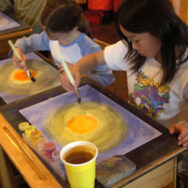
This is Part VIII of the series Kindergarten Considerations in which I have been discussing (and wrestling with) the considerations behind the seemingly innocuous decision of where to send my four year old son to school. The next two posts are dedicated to a discussion of our top options. We already looked at Montessori education. Today we’re talking about Waldorf schools. I have only known about Waldorf schools for a few years. The concept gradually seeped into my consciousness and I can’t remember what I first heard about it or from whom. We were living in Vancouver. Aaron came home from work one day and told me that a client had been explaining Waldorf to him and that it sounded really interesting. I had heard of the school before then but that was the most I knew of it for a long time. From there, I learned little bits here and everywhere. I’ve learned the most about Waldorf education in the last four months. Before then it was just this nebulous alternative school. There is a new initiative in our area to start a Waldorf school. There have been previous attempts over the years that have petered out. This particular initiative looks poised to happen. The intent is to open the doors in Sept 2010 with Kindergarten and grade 1, and to add a grade each year. There may be as few as 10 kids enrolled in the first year. I have mixed feelings about this but I will come back to that. First, some background on Waldorf schools for those of you who know little about it. Sometimes called Steiner Schools, the concept for the school is based on the thoughts of Rudolf Steiner. Steiner was a philosopher who was asked to develop the curriculum for children of the Waldorf-Astoria cigarette factory workers in Stuttgart and this is where Waldorf schools come from. In a nutshell, the Waldorf philosophy believes that the child should be approached on their own level which in the early years is primarily through play and imagination. Especially in the early years, the belief is that children learn best through imitation so the teacher plays the role of guide and model. There is a lot of emphasis on the natural world, on yearly celebrations, on community. Children write and draw to create their own textbooks. Many of the learning concepts are taught through the use of stories and over the years, children cover folk & fairy tales, fables, Greek myths, and more. In addition to regular academic studies, Waldorf schools also teach art, hand crafts (like knitting), gardening, music (every child learns to play an instrument), foreign language, a kind of dance/creative movement called Eurythmy. They have outdoor play time and also circle time with stories and songs. Contrary to the Montessori method which is very individually driven, Waldorf schools structure the day around often coming together as a group. You can learn more about the philosophy here or here. Waldorf schools, like Montessori schools, vary greatly in their implementation because they are run independently. It’s not like a franchise restaurant where your burger will be the same in Medicine Hat as in Chicago. As such, I’m sure there are good schools and not so good. One of the criticisms I have heard of various Waldorf schools is that they can seem rather cultish. I am not sure if that is a reference to the emphasis on natural rhythms which might feel too close to paganism for some families’ comfort or if it is due to a perception of over-adherence to the teachings of a single individual. The focus on the fairy stories, arts and natural world rhythms strikes some families as being too out there, hippie, airy-fairy or pagan. I’m not overly worried about any of those but I certainly see how some mainstream, conservative families may feel that they wouldn’t fit in the larger community of the school even if they are interested in the education for their children. At the risk of totally putting my foot in my mouth, my impression...
Read More

Recent Comments
No comments to display